Helix Journal · The Rooms · No. 4
 Danilo Ralić “The Plug”
Mastermind Groups for Founders: What Are They, and Are They Worth It?
Mastermind groups for founders are vetted peer circles that take one member's business apart per session, and they are worth the fee when three conditions hold: vetted peers, an enforced agenda, and nobody at the center selling you a stage. Every tier from $49 a month to $25,000 a year sells the same machine: six to twelve peers, a fixed cadence, one hot seat, and the difference between a worthwhile room and a costly one is which of those three conditions the seat actually enforces.

What is a mastermind group, and how does it work?
A mastermind group is six to twelve peers on a fixed cadence with one rotating hot seat, and it works by borrowing the room's judgment on a schedule: one member presents a live problem each session while the rest interrogate and advise it. It is a machine that predates the internet by decades. Napoleon Hill (author of Think and Grow Rich, 1937) named the master mind principle after studying Andrew Carnegie's advisory circle, and the modern founder version keeps his core mechanism intact: borrowed judgment, delivered on a schedule.
A real session has a shape you can set a watch to. Members open with a 90-second update round, wins and stuck points only. One member then takes the hot seat for 45 to 60 minutes and presents a live problem with the real numbers attached. Peers ask clarifying questions before anyone advises, the one rule that separates working groups from opinion circles. The seat closes with commitments logged in writing, read back aloud at the next session. Two rules hold the room: everything said stays inside it, and direct competitors never share a group. Run monthly, that structure hands a six-member group the hot seat twice a year each and a twelve-member group once. That airtime arithmetic is the honest answer to group size, whatever a sales page promises about scale.
The format is the product; the people decide what it is worth.
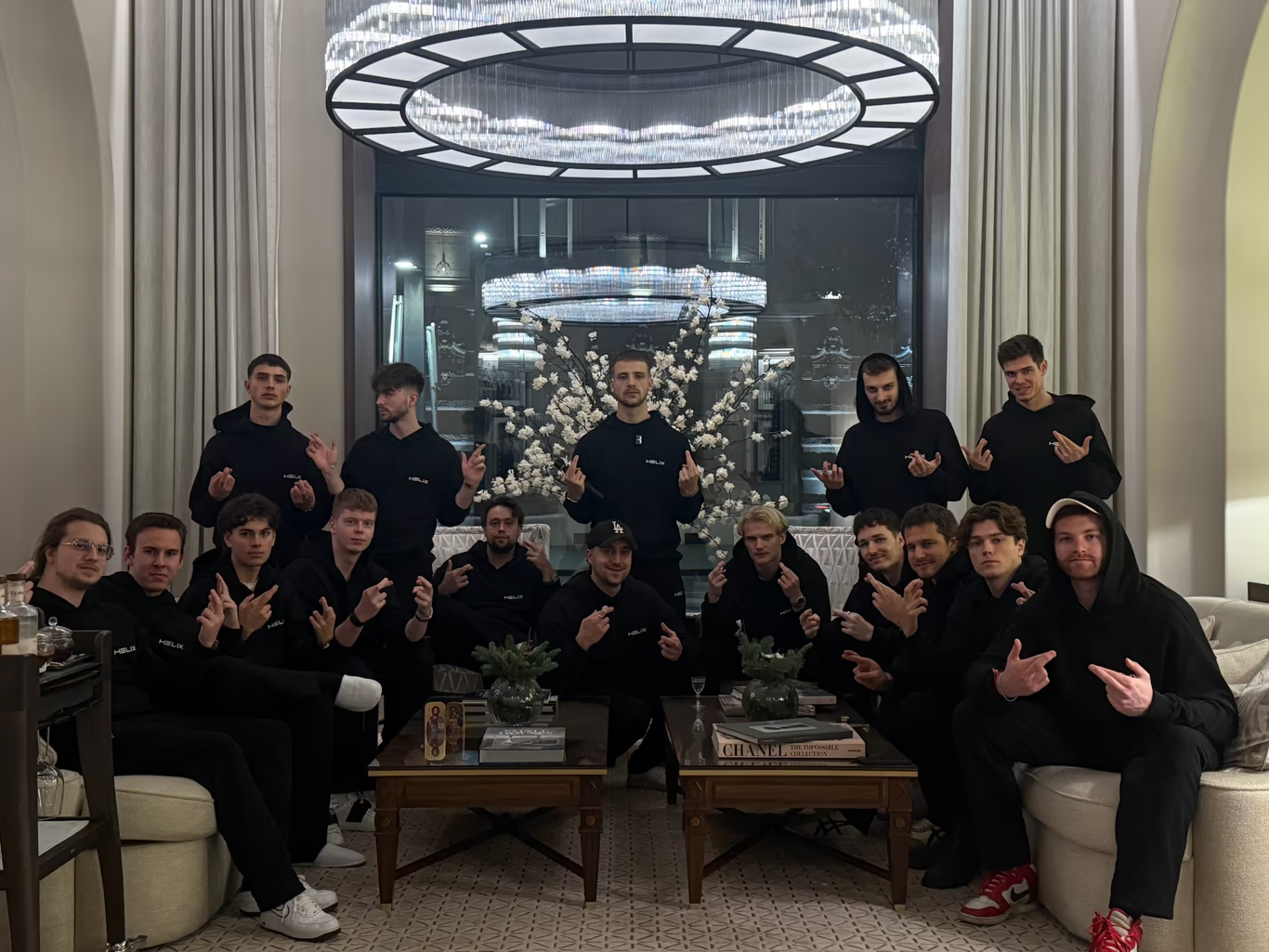
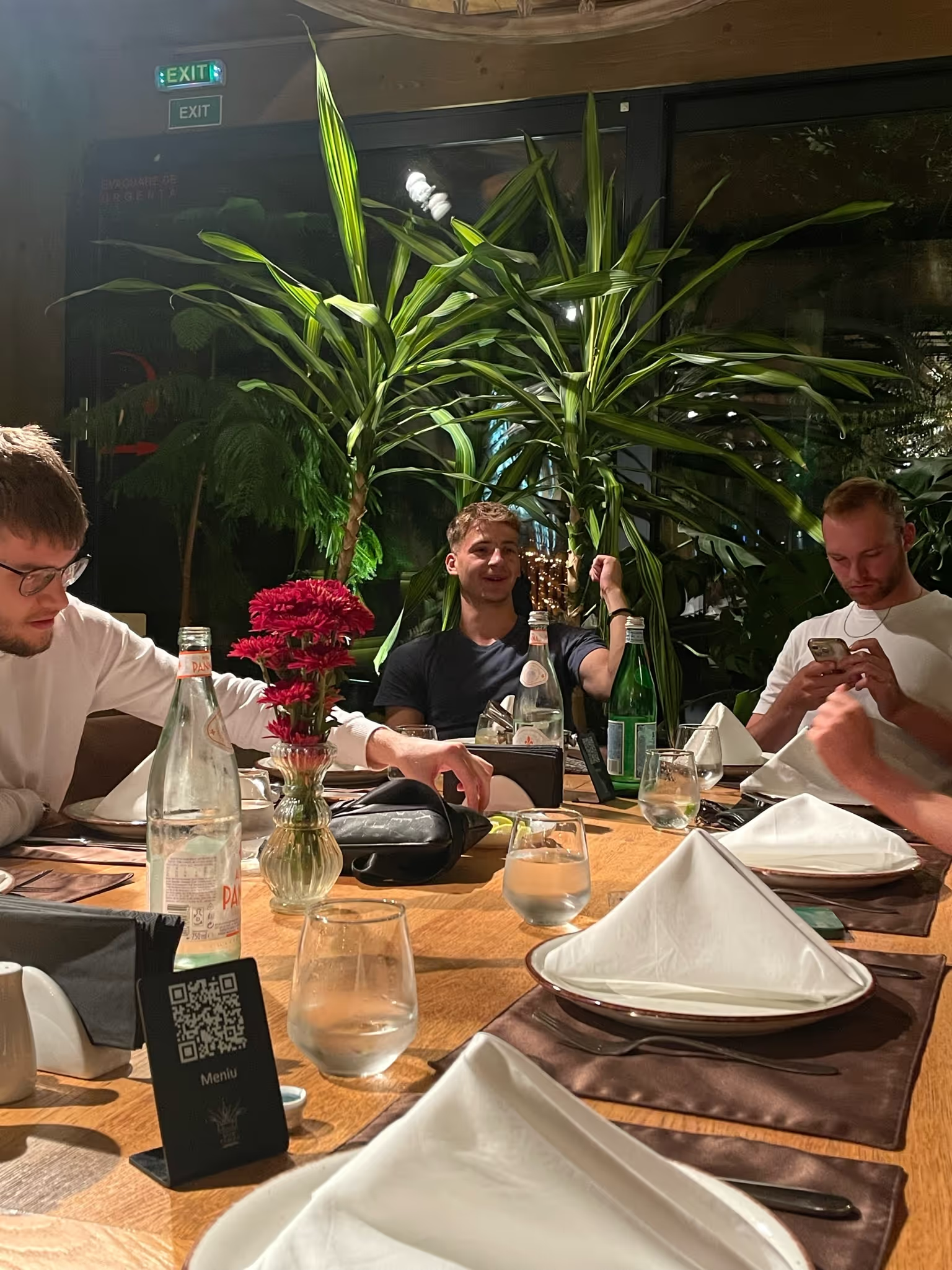
Helix (private vetted founder community, founded 2024) runs the format in person rather than over video: hot seats happen at dinner tables set across seven logged cities, Belgrade to Koh Samui, and commitments get checked at the next table instead of on next month's call. Sammy McKenna (founder of MC Performance) sits in those rooms, which tells you who a vetted seat is built for: an operator with numbers worth dissecting and the willingness to show them. The same skeleton compresses into a single evening, and the mastermind dinner agenda walks that 90-minute version course by course.

The structure breaks at scale, and it breaks fast. Past twelve members the update round eats the hot seat, your turn arrives once a year, and the group quietly becomes a lecture with dues attached. It breaks just as hard when two members chase the same customers, because nobody presents real margins to a competitor, which is why serious groups screen for category conflict before the first session.
Three formats wear the same label in sales copy, and they price differently because they deliver different things. A business coach sells one trained perspective on retainer, the right call when the bottleneck sits in your behavior rather than your market. A peer group, the kind EO (Entrepreneurs' Organization, founded 1987) and Vistage (chair-led peer advisory groups, founded 1957) build their programs around, assigns you a confidential circle plus a professional moderator. A mastermind in the strict sense is peer-owned: nobody's employee runs it, members enforce the format on each other, and the value tracks who sits in it. Whereas a moderated program survives weak members because paid structure carries them, a peer-owned group has nothing underneath it except its own vetting. Choose by the failure you fear more: paying a professional to carry a mediocre room, or trusting peers to police an excellent one.
How much do mastermind groups cost?
Fees for a mastermind group run between $588 and $100,000 a year, and four anchors map the whole spectrum. GrowthMentor (an online mentorship platform) sells peer squads at $49 a month, the $588-a-year floor. EO lands between $2,500 and $5,000 once chapter fees stack on global dues. Vistage charges $12,000 to $17,000 for a moderated group plus one-to-one coaching. Genius Network (Joe Polish's marketing mastermind) opens at $25,000, with a $100,000 tier above it. Those top rooms sell proximity to one famous operator, which is access rather than peer review. Three inputs drive the spread at every level: who curates the seats, who enforces the session, and what access rides along. The brochure sells prestige; the invoice buys those three.
You are paying for the filter on the door, not the chairs around the table.
Read the four anchors by who runs the room rather than by sticker price. The same fee buys a platform-matched squad at one tier and a paid chair at another, so the right-hand columns settle more than the number does.
| Tier | Annual fee | Who runs the room | What the fee buys |
|---|---|---|---|
| GrowthMentor | $588 ($49/mo) | Platform-matched peer squads | Cheap reps and a low-stakes on-ramp |
| EO | $2,500 to $5,000 | Member-led forum, trained moderator | A confidential local forum plus a global network |
| Vistage | $12,000 to $17,000 | Paid professional chair | A moderated group plus one-to-one coaching |
| Genius Network | $25,000 and up | Guru at the center | Proximity to one famous operator, more access than peer review |
Stop asking whether the fee is high. Ask what one changed decision is worth in your business. A re-priced offer, a killed product line, or a single qualified introduction clears any tier's annual cost on its own, so divide the fee by the decisions you expect the room to change: $15,000 against three changed calls is $5,000 each, cheap for an operator whose decisions move six figures. Add your own hours to the cost side, because twelve three-hour sessions at a $300 effective rate put $10,800 of founder time on the table before the first invoice. The calculator below runs your numbers against all four anchors and prints the break-even line.
Interactive · MastermindMath
Cost per peer-hour
Set your fee and format. The math assumes a three-hour session and updates as you move the sliders.
Scheduled model: 12 sessions × 3 hours = 36 contact hours a year, plus $9,000 of your own time at $250 an hour.
Some argue the whole category is a scam with better lighting, and the failures they point at are real: guru-led groups that sell stage time to whoever pays most, unvetted rooms where the loudest beginner anchors the level, stale circles nobody has pruned since launch. None of those causes is the format itself. A guru at the center means you bought an audience seat; an open door means the curation you paid for never ran. The fix is mechanical: ask who selects members, who enforces the agenda, and who was asked to leave in the last year. Rooms with good answers exist at every price point, and rooms without them exist at $25,000.
Read any room against this table before money moves:
| Signal | A working room | A funnel |
|---|---|---|
| Selection | One operator screens every seat for stage and model fit | The checkout page approves whoever pays |
| Airtime | The hot seat owns the hour; a timekeeper protects it | The host owns the microphone |
| Continuity | Commitments logged and read back next session | Every meeting starts from zero |
| Pruning | Seats reviewed yearly and ghosts removed | Nobody leaves until the card declines |
| The upsell | The fee is the entire product | The room exists to sell the next tier |
Two hits in the right column mean the room is selling you, not serving you. Pair the audit with founder accountability structures that keep working when nobody is checking, because a group that cannot hold commitments cannot change decisions either.
From the founder's journal
Stop joining masterminds run by big creators. Find the small groups with actual killers doing everything behind the scenes — that's where you learn the s nobody teaches in a course.
Danilo Ralić — “The Plug,” Helix founderMastermind group or founder community: which one do you need?
You need a mastermind group when you want structure on a schedule, and you need a founder community when you want a room that keeps existing between meetings. Pick the mastermind for a guaranteed turn in the hot seat on a fixed cadence; pick the community for the same vetted people staying reachable the day a problem appears.
Name your own year first, and the choice usually decides itself. Lean toward a scheduled mastermind, rather than a standing community, when most of the signals below describe it.
- You want a fixed agenda and a guaranteed turn in the hot seat, not open-ended access
- Your hardest problems are big and infrequent, the kind that survive a three-week wait for the next session
- You want one trained chair or moderator enforcing the format so a weak month still runs
- You are testing the format and want a low-stakes on-ramp before committing real money
- One deep working session a quarter moves your business more than daily contact would
The two formats solve different halves of the same problem. A mastermind hands you twelve sharp hours a year, then dissolves until the next call, and whatever happens to you in between happens alone. A community keeps the same verified people within reach continuously, so the question that cannot wait three weeks gets asked the day it appears. Unlike a session, proximity has no agenda, which is precisely why it catches the problems you did not know to present. The full category breakdown sits in the founder community guide, and the gate mechanics live in how a private founder community selects its seats.
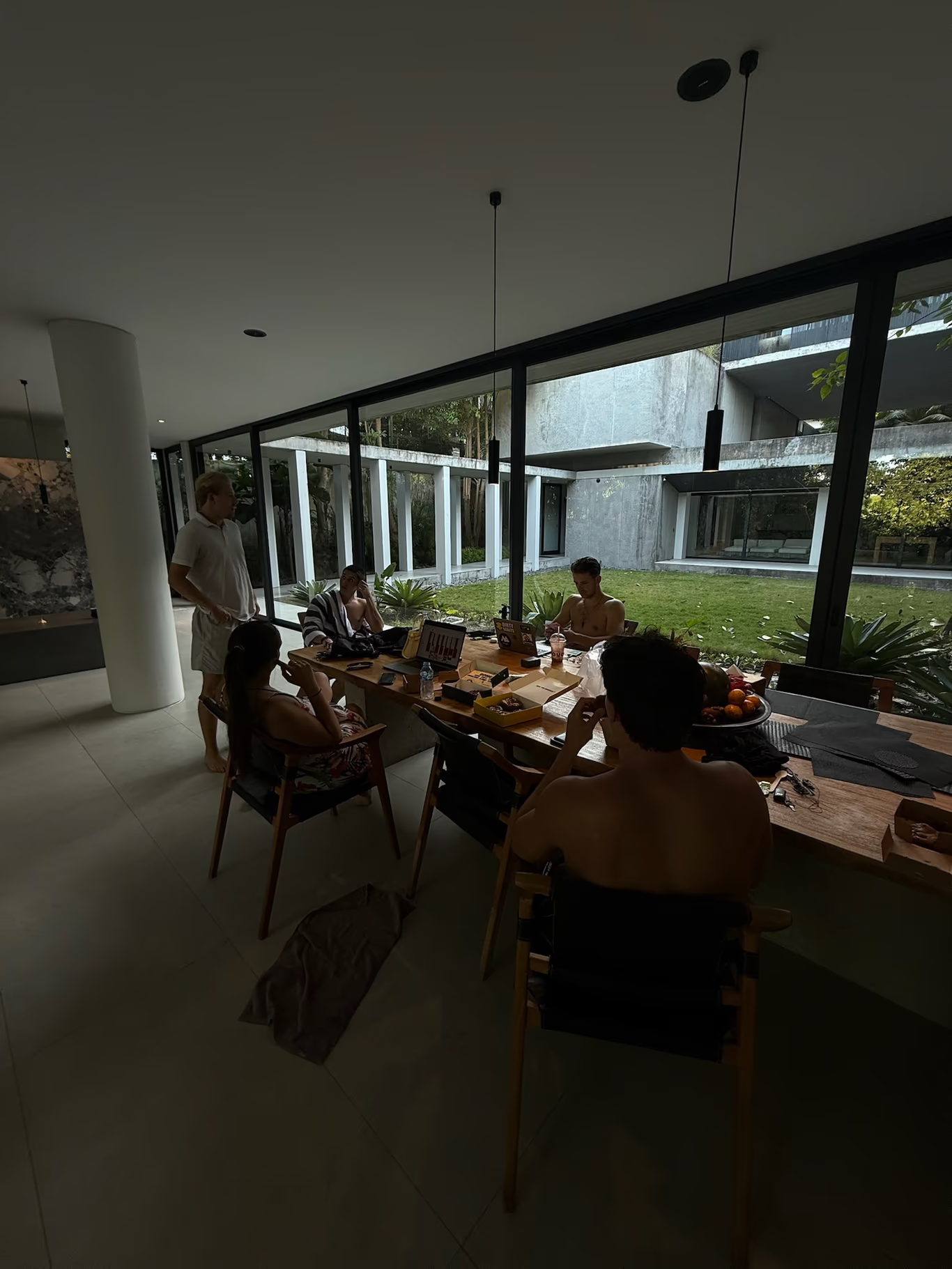
Helix runs the hybrid in public. Mastermind-style hot seats run inside a vetted community capped at ~100 seats, on the road rather than on a video call. The record is checkable: 60+ trips across 4 continents since 2024, logged from Belgrade to Koh Samui, and 12 public vlogs documenting the cadence. The group never dissolves between sessions, because the operator who dissected your pricing at dinner in Bucharest is at breakfast the next morning and at the next table a few months later. Continuity is the part that compounds. One sports-education founder went from $200k to $2M in annual revenue inside twelve months, on introductions made at the table. A scheduled call could have produced the same advice. It could not have produced the repeated contact that let two verified operators trust each other with a deal.
Emil Sorensen (founder of Øresund Partners) is one of the named operators on a public roster of 70+ members, which you can read end to end before you ever apply.
The hybrid breaks in one honest place: weekly accountability against a single metric. A founder who needs a standing Tuesday call, where the same voice asks about the same number every week, is better served by a lean scheduled group or by the ceo peer groups built around exactly that rhythm. Buy the cadence that matches your problem, not the brand that matches your ambition.
The decision path is short: want a format you control, build a six-seat group, enforce the agenda from the first session, and prune it every year. Want a room that persists, take a vetted seat where mastermind groups for founders run as one layer of a standing community rather than the entire offer.
Masterminds rent you a hot seat a few times a year. Helix keeps the table set year round, so the seat stays yours between sessions, and one seat is open right now. Requesting it takes four minutes, and one person reads every word of the application.