Helix Journal · The Work · No. 8
 Danilo Ralić “The Plug”
Do You Need an Accountability Partner for Entrepreneurs?
You need an accountability partner for entrepreneurs once your deadlines answer to nobody, and the arrangement only works when a stake, a cadence, and a witness all back it. Strip any one of those three and what remains is two people trading good intentions. Those intentions dissolve by week five, so the structure is what holds, built part by part below into the exact check-in protocol you can run this week.

Why does self-accountability fail for founders?
Self-accountability fails for founders because leaving employment deletes the one person entitled to ask where the work is, and that gap is structural rather than a flaw in your character. A job ships with the accountability layer pre-installed: deadlines attach to a salary, reviews land on a schedule, a named human notices a slipped week before it becomes a slipped quarter. Founders keep the workload and lose the layer the same afternoon. Every deadline you set afterward negotiates with a counterparty who always says yes, because the counterparty is you. The to-do list rolls forward, the launch slides a month, and no consequence arrives to mark the slide. Psychologists call the engine present bias, the pull of today's comfort over next quarter's payoff. Operators call it the third week of working for yourself.
Nobody above you, nobody behind you: that is the actual org chart now.
The market already priced the missing layer. Focusmate (virtual coworking platform pairing strangers for timed work sessions) sells nothing except another human watching you work, and operators pay for it. stickK (commitment-contract platform launched 2008) lets users stake their own cash against a referee who confirms the work happened. Beeminder charges your card when you drift off pace. None of these teach you anything new; they sell back slices of the boss you quit. The missing ingredient was never information. It was a person with the right to ask, and founders pay monthly to rent one.
Lined up against each other, the rented-boss tools reveal what each one actually replaces, and the gap each one leaves open.
| Tool | What it replaces | What it never asks |
|---|---|---|
| Focusmate | The colleague at the next desk who sees you working | Whether the task was worth the session |
| stickK | The pledge a referee confirms, with your own cash at risk | Whether the goal still deserves the money |
| Beeminder | The automatic penalty for drifting off pace | Which number slipped and what you cut to cover it |
| An operator peer | A person with the standing to ask and the context to judge | Nothing the others dodge; the second question is the point |
This breaks differently for funded founders, who technically report to a board. Directors restore oversight of the company, not the operator: strategy gets checked on a quarterly slide, and nobody asks on a Tuesday whether you sent the partnership emails you promised yourself.
Some argue discipline is the founder's job description, and that renting outside pressure admits you lack it. The most disciplined operators do the opposite. A founder who could grind in private still tweets the launch date before the build is done, still tells investors the quarter's number before the quarter starts, still books the demo day that can't move. None of that is weakness. It is a motivated person reaching for an external stake after watching private resolve slip a few cycles. The public commitment is the same mechanism, wearing a press release.

What makes an accountability structure that actually holds?
An accountability structure that actually holds stands on three parts: a stake that sets what a miss costs, a cadence that sets how often the question arrives, and a witness who owns the asking. Together those three decide whether the arrangement survives a bad month or quietly dissolves.
Stakes sort into a ladder, and the rungs are not interchangeable. Cash sits on the bottom: a charge that lands when you derail moves single tasks, which is why the referee apps keep growing. Its ceiling is just as real, since anything priced can be absorbed, and a founder midway through a good year absorbs it without blinking. Reputation sits a rung up, because shame carries no fixed price; stating a number to a room and reporting the miss to the same faces costs what money cannot model. The top rung is relational. A standing seat among operators who expect you back makes a miss identity-shaped: you return to the same chairs either as the person who did it or the person who explains. The table below maps the three rungs against what each rung is built to carry, and the leak each one springs under pressure. Choose the stake one rung above the one you could comfortably ignore.
| Stake | A miss costs you | Where it leaks | Built for |
|---|---|---|---|
| Money on the line | A pre-agreed charge to your card, or a pledge a referee releases | You price the failure like a parking ticket and pay it | Single habits and short pushes, two to eight weeks |
| Reputation in the room | Saying "missed it" to peers whose respect you want | Polite rooms stop asking the second question | Quarterly goals, for as long as the room keeps meeting |
| A table that expects you back | Returning to the same seats with nothing to report | Almost nowhere; no fee exists that cancels a face-to-face debrief | Multi-year operating rhythm, trip to trip |
Money stakes also expire quietly. The pledge that stung in the bootstrap years reads as a rounding error after a seven-figure year, so a cash stake either scales with the operator or the bottom rung falls off the ladder.
Money buys its way out, reputation discounts slowly, a table holds.
Cadence is the second dial, and weekly is the better choice for execution. A quarterly resolution hands present bias ninety days of darkness to work in, whereas a weekly check-in leaves any commitment at most six days from daylight. Monthly sits in between and suits direction reviews, which is the rhythm most CEO peer groups run on. Daily overcorrects for anything bigger than a habit: report fatigue sets in and the answers turn ceremonial by week three. Match the loop to the unit of work, then never move the slot.
Witness quality is the dial founders set last and feel first. A friend hears that you missed the number and offers comfort; an operator who knows your numbers hears the same sentence and asks which channel underperformed and what you cut to cover it. The difference is interrogation rights. App referees verify a thing happened, friends verify you tried, and only a peer running a comparable P&L can verify whether the target deserved hitting at all. Even a soft witness beats silence. A founder who emails one weekly update to a friend ships more than the one who keeps the plan in their own head. Upgrade the witness from friend to operator and the questions sharpen, so the follow-through sharpens with them. The right fit is the witness you cannot bluff, which is rarely the company you would most enjoy.
The witness decides whether your check-in is a mirror or a hug.
The skeptic case says partner arrangements are mutual procrastination in business casual, and the criticism describes the common build accurately: two friends, no stake, a floating meeting time, silence by week five. That version earns its reputation. The repairs are structural rather than motivational. Fix the slot so the meeting survives busy weeks, put a stake under it so a miss costs something real, and seat a witness licensed to interrogate instead of nod. Run all three repairs and the thing the skeptics describe no longer exists on your calendar.

From the founder's journal
Everyone's got that one frog — the thing you know would change everything if you actually did it. It's not a knowledge problem and it's not a time problem. It's a you-versus-you problem.
Danilo Ralić — “The Plug,” Helix founderHow do you build your own accountability cadence?
You build your own accountability cadence by booking thirty minutes weekly, same day, same hour, where every commitment is stated as a number with a date and last week's number is reported before any narrative of the week. The entire build fits inside one page, a recurring calendar invite, and three decisions.
Run the three decisions in order. Choose your stake first, one rung up from comfortable; for most operators past their first strong year, that rules out cash on day one. Pick the witness whose questions you cannot predict; most circles hold only friends at the start, so deliberately meet other founders until yours holds an operator. Set the rhythm last and default to weekly, dropping to daily only for a thirty-day habit install and rising to per-quarter only for direction calls.
Interactive · Cadence Builder
Stake, witness, rhythm
Three choices compose your check-in protocol below. The full script is on the page; nothing is gated.
Your protocol · the script the table runs between trips
- 01Commit. One sentence: the number, the date, said out loud to your witness.
- 02Stake.
- 03Witness.
- 04Rhythm.
- 05Report. The number against the commitment opens the next check-in, before any story about the week.
The strongest stake is a table that expects you back.
Stated out loud to a specific face, a goal stops being a private preference and becomes a social fact. The founder who tells a peer "I ship pricing v2 by Friday" has spent something the same line in a private doc never costs, because a promise made to a person who will ask carries enforcement a spreadsheet never will.
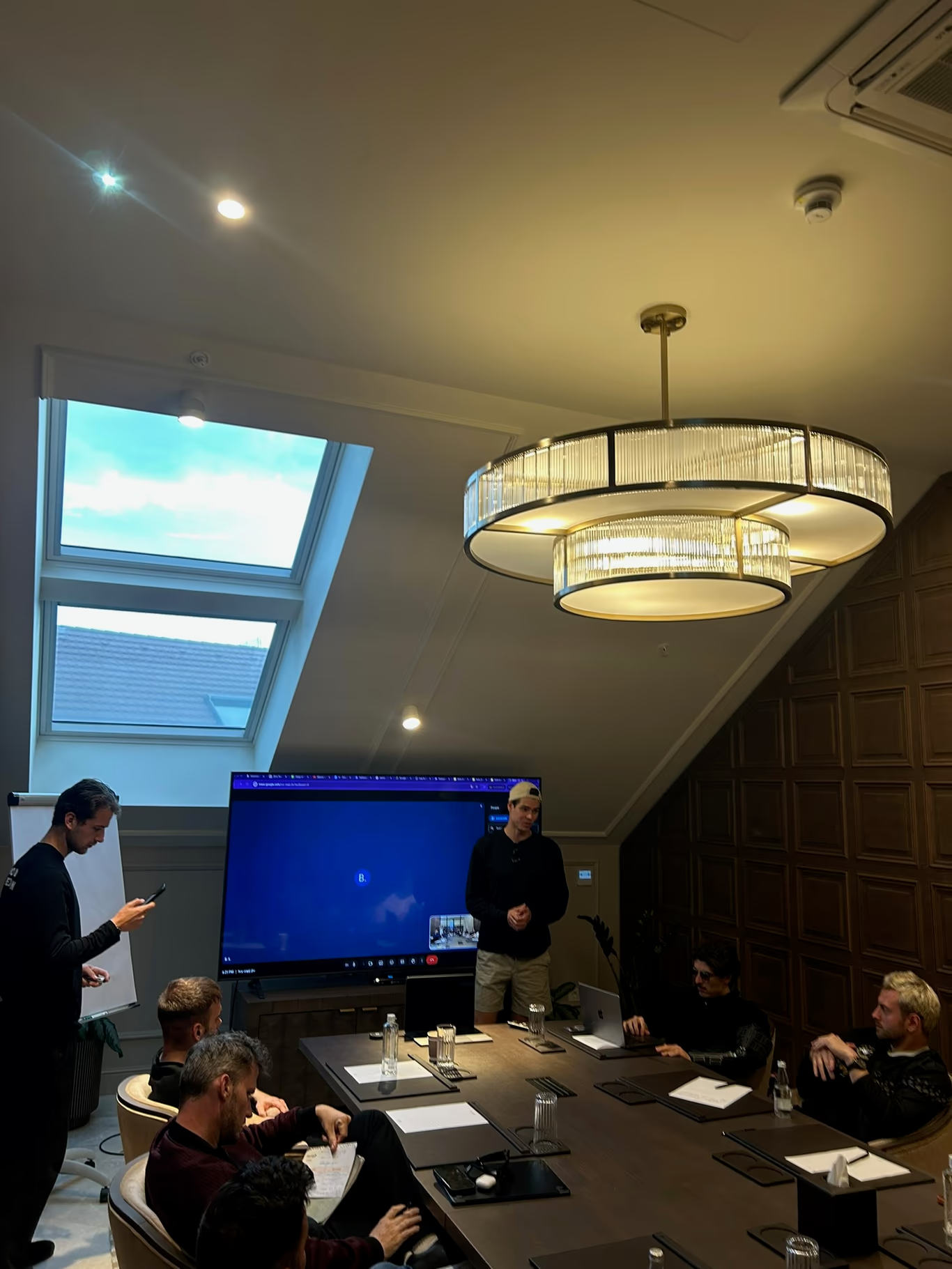
Helix (private vetted founder community, established 2024) runs this structure at the top rung, and the cadence is geographic. The table convenes in a different country every few months: Belgrade, Marbella, Cape Town, Koh Samui, Bucharest, Tivat, and Albufeira fill the trip log. Commitments stated at one table stay on the record until the next; what a member told the room in Bucharest is the first thing it asks about over dinner in Tivat. No app pings anyone between trips. The next flight is the deadline, and the people boarding it remember the number you named. Roughly 100 seats keep the memory personal, since the format collapses past the point where everyone can hold everyone's situation. The compounding shows in the one outcome Helix claims as its own: a sports-education founder grew from $200k to $2M in annual revenue inside twelve months of introductions made at the table. The room that checks your commitments turns out to be the room holding the relationships your next stage needs.
The hot-seat is the strongest single setting for stating a commitment. One operator takes the floor while the table interrogates one decision, and the session ends with next steps spoken to everyone who just heard the reasoning; the mastermind dinner format is built around that exact sequence. Anyone who has named a number in that chair understands why the follow-through differs from a note in a planning doc.
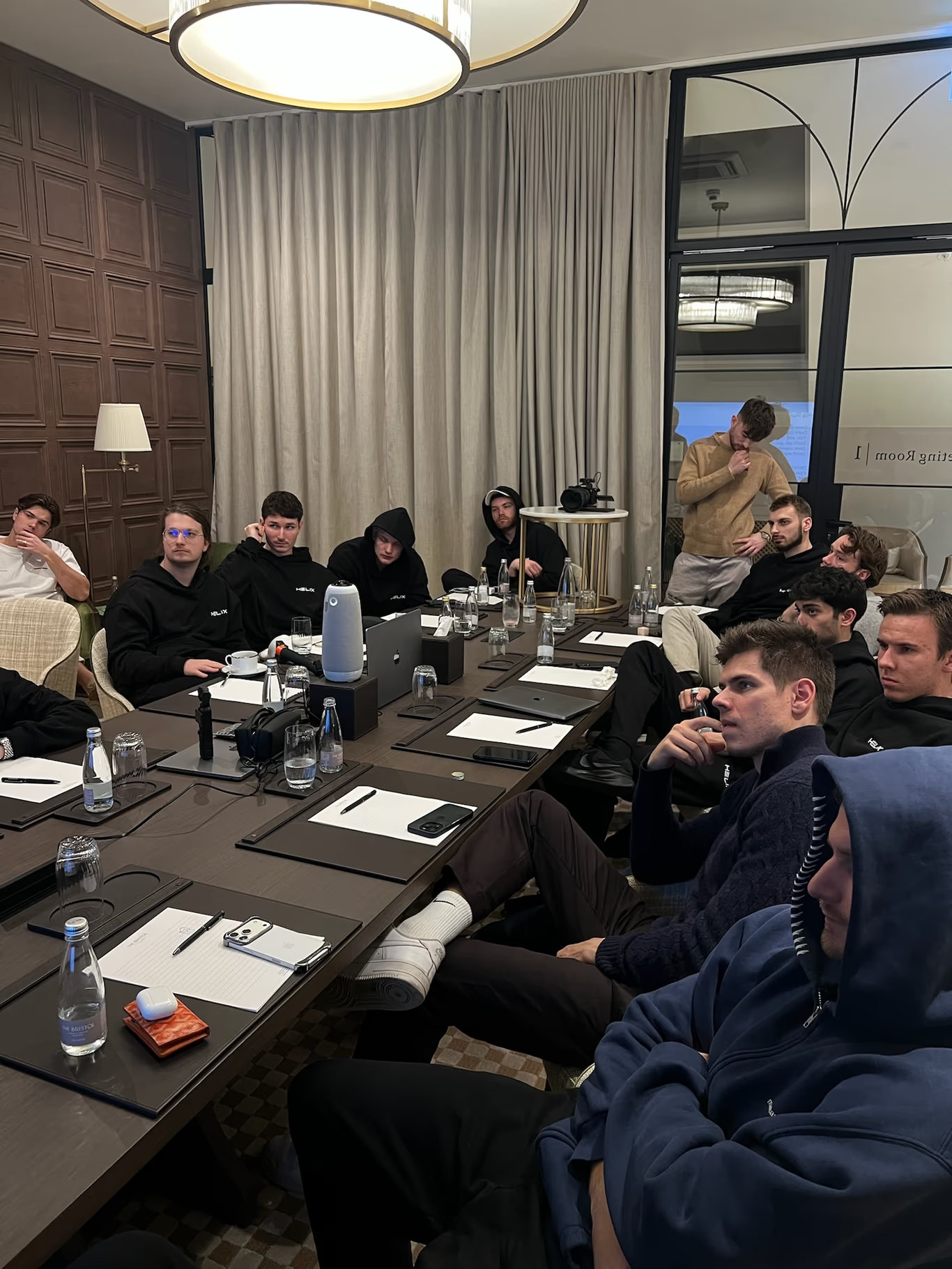
Watch one failure mode after the build works: status theater. The meeting survives and the stake stays, while the answers slide from numbers into narrative, reporting busyness instead of results until the witness is auditing a story. One rule prevents it, and the protocol above already contains the rule: the number against the commitment opens every check-in, before any account of the week.
Run a monthly audit of the arrangement against the signs it has quietly decayed. Catch any one early and the repair is a single conversation; let three stack up and the cadence is already ceremonial.
- The slot has moved more than once, which means the meeting now flexes around everything else on the calendar.
- The opening line is a story about the week instead of the number against last week's commitment.
- The witness accepts "got busy" without asking which channel underperformed or what you cut.
- A missed stake went uncollected, so the cost is now theoretical and the next miss is cheaper.
- Both of you report wins and neither reports a number that fell short, which is statistically impossible across a real quarter.
A witness fills one seat of the larger founder support system; mentors, coaches, and therapists carry loads a check-in cannot, and none of them absorb the decision fatigue of choosing alone all week. Build the check-in first anyway: an accountability partner for entrepreneurs is the cheapest piece on that map, and the piece whose absence shows fastest.