Helix Journal · The Rooms · No. 2
 Danilo Ralić “The Plug”
What Is a Private Founder Community, and What Do 100 Seats Buy?
A private founder community is a vetted room where every member was chosen by a person rather than a payment form, and 100 seats buy a table small enough to hold every name, company, and situation in your head by the second trip. A named human reads each application, talks to the applicant, and offers a seat only when the room improves; where a credit card is the only gate, you have bought a subscription wearing a community's clothes. What the cap actually purchases is recall and candor: at a hundred seats the dues buy verified peers, structured proximity, and one reviewer's ongoing judgment about who sits down next, not a content library you could rebuild in a quarter.

What makes a founder community actually private?
What makes a founder community actually private is one person who reads every application and can say no; everything else is decoration. Take the pipeline behind Helix (private vetted founder community, est. 2024) stage by stage. An application arrives through a short Typeform titled Request a seat, and Danilo Ralić (the community's founder) reads it himself. No committee scores it, no software ranks it, no assistant filters it first. A conversation follows for the applications that hold up, and it is operational: what you build, what you carry, what you would bring to a table of operators who will know your numbers by the second dinner. The deciding question is never revenue in isolation but table fit, whether the room gets better with this person at it. Yes earns a seat; the next trip puts a face on the name.
Six stages, one reviewer, zero automation.
The pipeline is published below this paragraph, with what each stage evaluates and what kills an application at it. Run any room you are evaluating against the same exposure test, because a community confident in its selection will show you how selection works. Choose the room whose gate you can inspect.
Interactive · The Vetting Funnel
Six strokes, one seat
Every stage of the real pipeline. Tap a stroke to see what it evaluates and what ends an application there.
Evaluated: what you build, at what scale, and why a seat now.
Ends it: anonymity. No named company, no checkable footprint, no application.
Timing: four minutes of your time, through the Request-a-seat form.
Evaluated: substance over polish. The founder reads every application personally.
Ends it: audience presented as traction; adjectives where numbers should be.
Timing: days, not minutes. A human queue moves at human speed.
Evaluated: how you talk about your numbers, and what you would ask the table.
Ends it: pitch mode. Selling yourself to the room instead of joining it.
Timing: one real exchange, scheduled around two time zones.
Evaluated: the only question that decides: does the table get better with you at it?
Ends it: redundancy. A fifth seat with the same model and nothing new to trade.
Timing: the slow stage, on purpose.
Evaluated: nothing further. The yes arrives in writing, with the terms and the next dates.
Ends it: only you can, by sitting on it.
Timing: immediate once the answer is yes.
The seat becomes real: a face, a name, a place at the next table on the calendar.
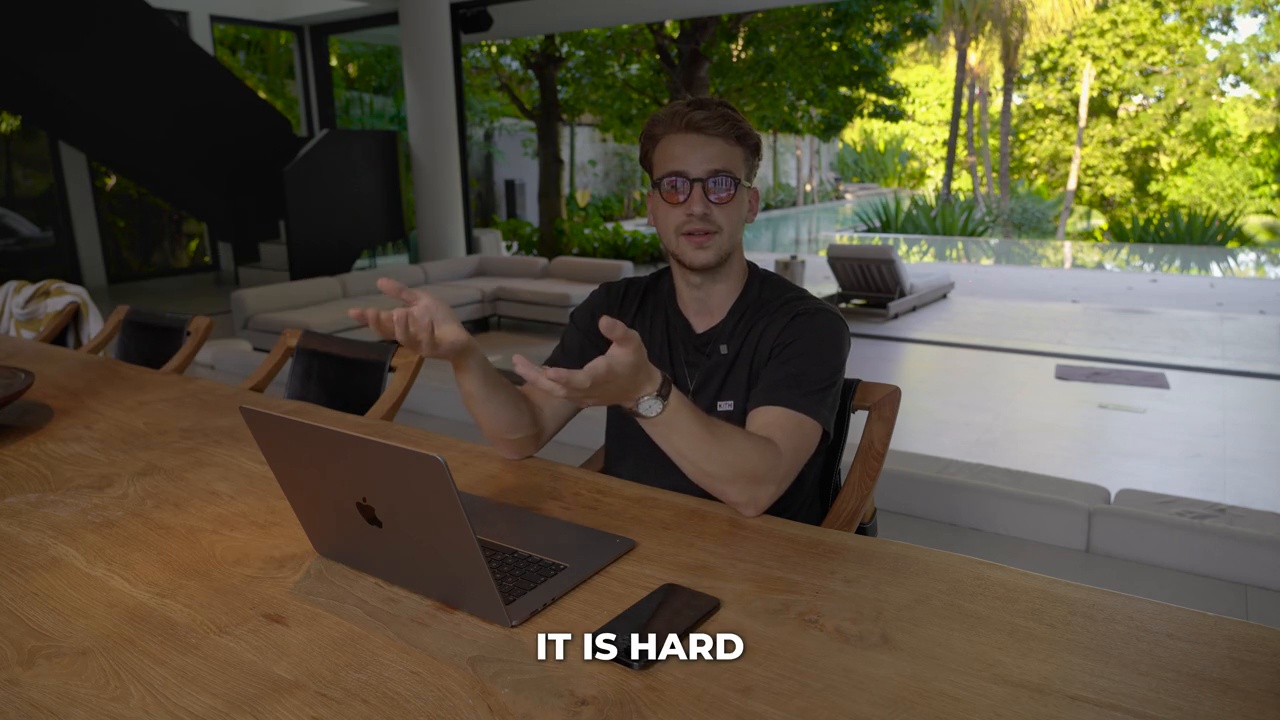 The reviewer, on camera · 6 min
Acceptance rate is the number applicants ask about, and it is the wrong number. A 4% rate can describe a brilliant filter or a tiny denominator, and you cannot tell which from the outside. The operator controls who counts as an applicant, so the percentage is whatever the marketing wants it to be. Verifiability, unlike the rate, cannot be staged. A published roster, a stated cap, and a named reviewer are checkable in ten minutes from your phone. Judge the gate by what it shows, not by what it claims to refuse.
Here is the ten-minute inspection, in the order it takes least effort to confirm:
- Find the roster and click two names. Real companies that resolve to real sites mean the seats are people, not stock photos.
- Read the stated cap out loud. A specific number that the operator commits to, instead of "exclusive," tells you growth is not the business model.
- Name the reviewer. One person you can point to, who can be asked who they turned down last month, beats any committee or algorithm.
- Time the yes. An offer that requires a conversation, measured in days, signals a human read it; an instant approval signals a payment form.
- Trace one claimed outcome to a person. A result attached to a named member can be checked; a number with no owner cannot.
The edge case worth naming is speed: an acceptance email that arrives ninety seconds after payment means a machine said yes, and a machine cannot evaluate whether a table improves. Ninety days of patience costs less than a year in the wrong room.
Slow is not a defect in this category; slow is the selection running.
Why do small, capped communities compound faster?
Small, capped communities compound faster because a hard cap converts membership from inventory into real estate, and real estate rewards holding while inventory rewards selling. Inventory scales: every new member of a 40,000-person network adds revenue to the operator and noise to you. Seats do the opposite. Each one you fill makes the rest of the table worth more, because the value is the relationships among the seats, not the headcount. At 100 members you hold every name, company, and situation by the second trip; at 1,000 you are in an audience; at 45,000 you are a row in a database. The cap also disciplines the operator, because a full table earns nothing from growth and everything from keeping the seats valuable, which inverts the incentive that ruins large networks, where the sales team's win is the member's dilution. Scarcity here is not the marketing. Scarcity is the load-bearing wall.
The return side has names attached, and the honest version separates two claim types. A sports-education founder grew from $200k to $2M in annual revenue after introductions made at this table, inside twelve months, the kind of outcome a room can legitimately call its own. The roster also shows caliber that selection produces rather than causes: an e-commerce operator running past $30M a year, an EdTech founder whose company passed a $10M valuation within two years of taking a seat, and Benjamin Schwarzenbach (partner at Swiss Ark Partners, a Swiss investment firm) seated beside them. Rooms that blur attracted and caused are selling you their members' resumes. Rooms that keep the two apart are showing you their filter, and the filter is what the dues buy. The arithmetic checks by hand: eleven public names, every company linked, every claim owned by a person you can ask. Print the roster of any room you are weighing and run the same pass. The $200k-to-$2M jump moved that fast because both sides were verified before the introduction, the pace peer deals run at when nobody vets anyone first.
Member outcomes that predate a room belong to the member, not the room.

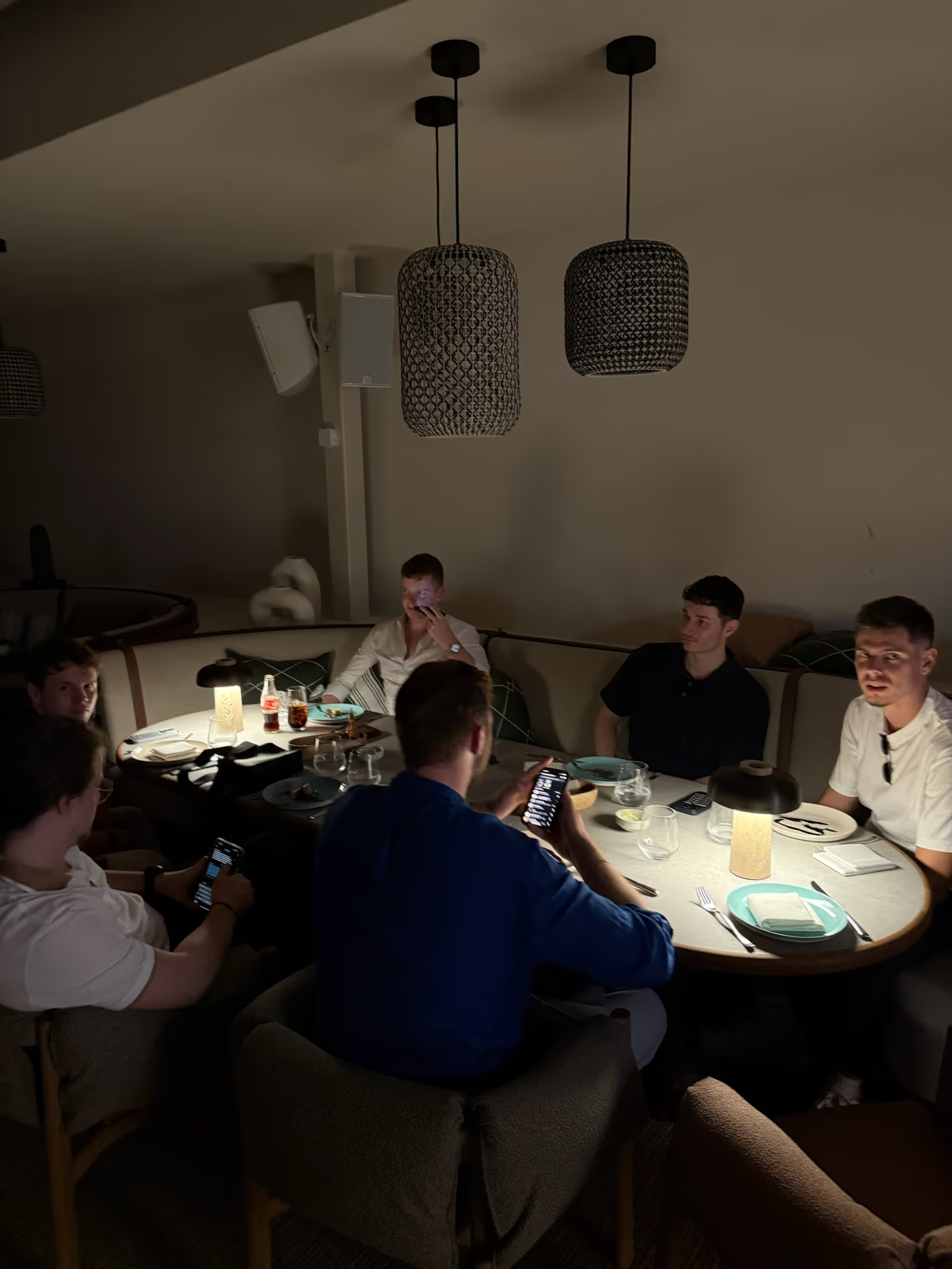
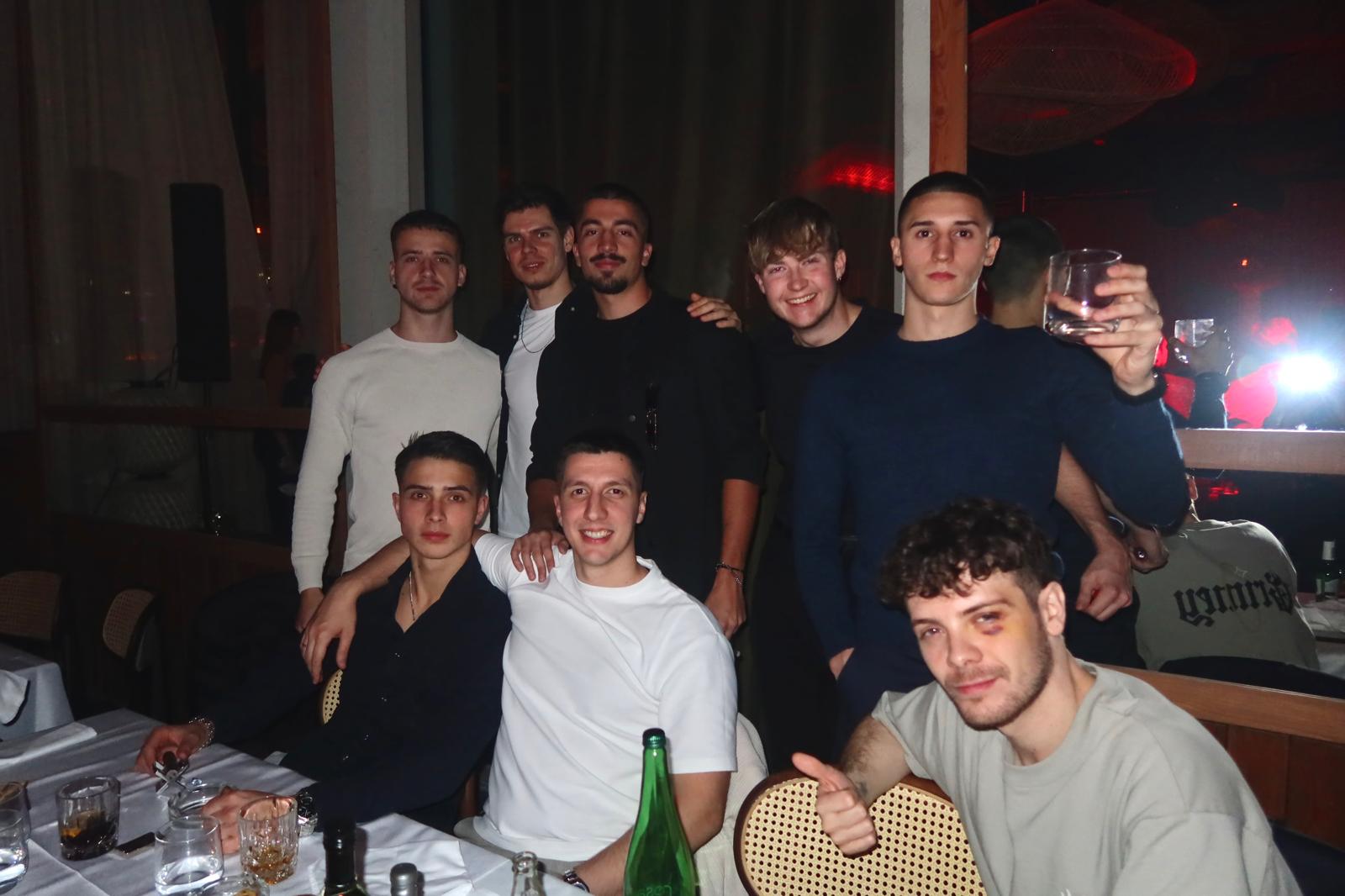
What a private founder community physically delivers is proximity on a calendar: dinners and trips logged across Belgrade, Marbella, Cape Town, Koh Samui, Bucharest, Tivat, and Albufeira, with the full record in the open trip log. No course library, no content drip, no webinar archive nobody opens. The deliverable is the table itself, set in a different country every few months. A first dinner is introductions; a third dinner with the same forty operators is shorthand, where someone already knows your last quarter and opens with the question that matters. By the third trip nobody is explaining their company from scratch, so the table skips to the hard parts. What compounds is that familiarity, the same hundred-odd relationships deepening each time the table is set. That is the one asset a bigger competitor cannot copy by spending more, because time at the table is the only way to buy it. Content libraries are reproducible in a quarter; trust at that depth is not.
The same dues buy a categorically different room depending on how many seats it sells. Headcount, not price, decides what you walk into. Read the tiers as what each number actually hands you, not as line items on an invoice:
| Headcount | What you are in | Who the operator serves | What you can recall |
|---|---|---|---|
| ~100, capped | A table | The existing seats | Every name, company, and situation by the second trip |
| ~1,000 | An audience | The next thousand sign-ups | A handful of faces, the rest a feed |
| 40,000+ | A database | The sales pipeline | Almost nothing; you are a row |

From the founder's journal
The guy who treats the waiter the same as the billionaire, whose vibe doesn't change with someone's bank balance — those are the people I want in my circle. That's who this is built for.
Danilo Ralić — “The Plug,” Helix founderWhat does membership buy, and how do you judge if it is worth it?
Membership buys verified peers, structured proximity, and a reviewer's ongoing judgment about who joins next, and you judge it worth the dues when a single introduction repays them. Everything else a community advertises is packaging around those three.
Some argue the whole category is scarcity marketing, exclusivity invented to justify an invoice. Give the objection its strongest form: introductions happen free online, and plenty of operators built real networks from cold messages alone. The refutation is behavioral, not rhetorical. A founder will not post a real churn number or a botched raise into a group of 12,000 strangers, because the cost of being quoted out of context is too high. The same founder says it across a dinner table where every seat was vetted and carries the same exposure. That is why the conversation worth paying for happens only behind a gate. You can assemble contacts without paying a dollar; candor is what the dues actually buy, and it has never scaled past a door anyone can walk through.
So the objection survives as a budgeting rule. Pick the free stack for reach; pay for a vetted room only when you need the conversation reach cannot produce.
The money questions have practical answers, and they sort faster than founders expect. Most founders run membership through the company as a professional-development or business-networking expense, the same budget line as a conference ticket. Deductibility in your jurisdiction is a question for your accountant before you join, and a community that invoices the business with a clean paper trail keeps that conversation short. Treat the dues like any tool purchase, priced against output and reviewed annually. Two questions sort the rest of the worth-it math, and both fit on an index card:

- Would the company pay for one customer, partner, or hire this year? A single introduction clearing that bar repays most memberships in the category.
- Are you buying information or calibration? Information is free everywhere; unlike content, calibration requires verified peers, and only one of the two belongs on an invoice.
When both answers point the same way, a vetted seat is the better choice; when either does not, stay free and revisit in a year. Either way the decision came from your numbers, not a sales page.
Run the red-flag checklist before any application fee leaves your account, and choose by artifacts, not adjectives. One flag is survivable; two or more is the pattern:
- No visible roster. A room proud of its members shows them, with names and companies.
- No stated cap. Unlimited "exclusive" membership is a contradiction in one sentence.
- Instant acceptance. A yes without a conversation means the gate is a payment form.
- The founder is nowhere in the process. Whoever built the room should be choosing who enters it, or selection is a job title nobody holds.
- Outcomes without owners. Testimonials with no names attached cannot be checked against anything.
The room this page dissected passes its own checklist in public. The roster is named on the homepage of this private founder community and inside the founder community guide; the cap sits at about 100 seats; the reviewer is named; the application takes four minutes through how to join Helix. The only variable this page cannot resolve is whether the table improves with you at it. One person decides that, the same way every seat before yours was decided.