Helix Journal · The Rooms · No. 17
 Danilo Ralić “The Plug”
How Do You Run a Mastermind Dinner That Pays for Itself?
A mastermind dinner pays for itself when you run it as a 90-minute working session: eight founders, one conversation, two timed hot seats, real numbers out loud. One well-run table returns a re-priced offer, a killed project, or an introduction worth more than every plate on the bill.
It is not a meetup and it is not networking; it is the cheapest board meeting you will ever attend.
Why does a dinner table beat a conference room?
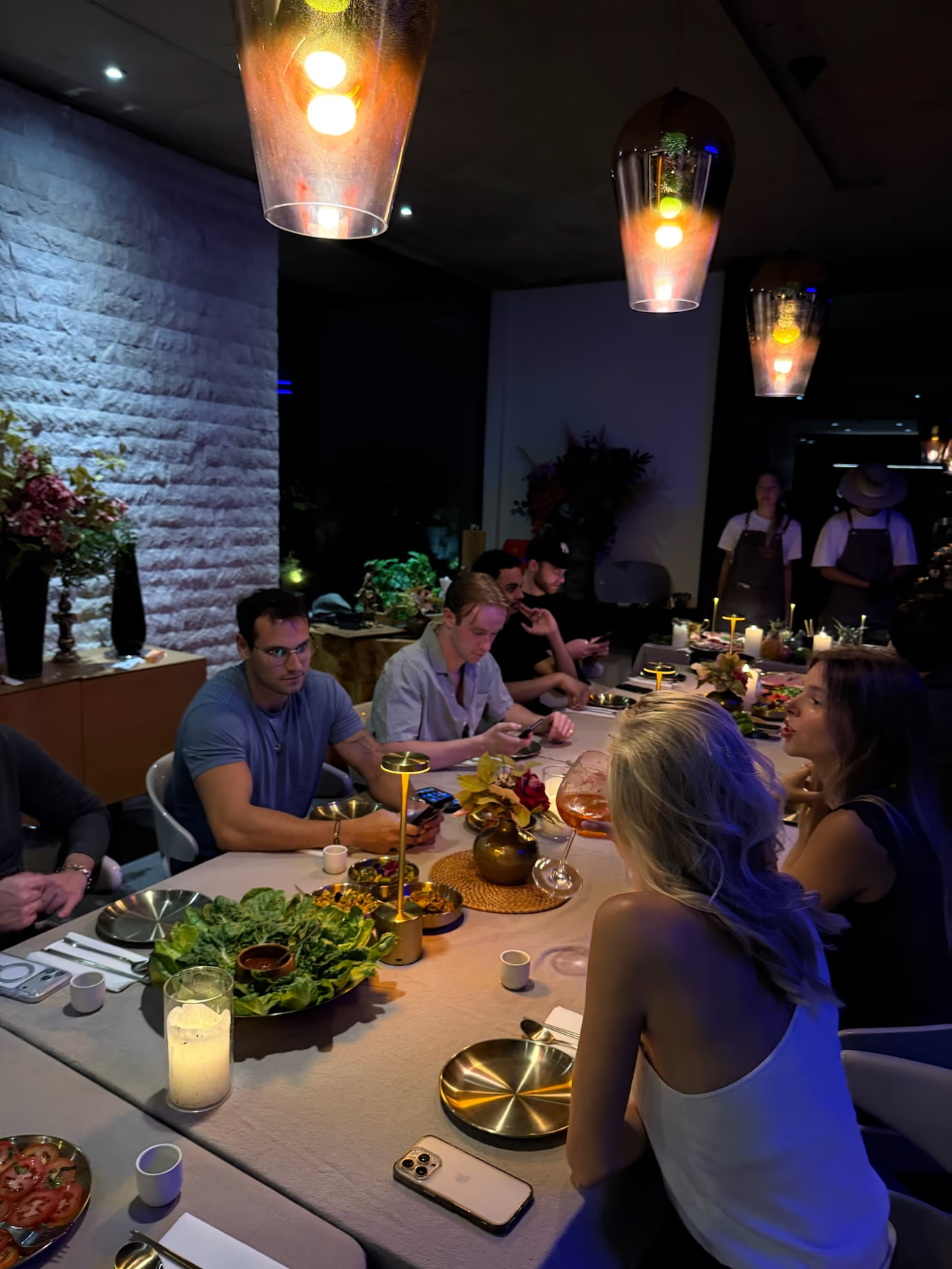
A dinner table beats a conference room because the shared meal strips out the audience that keeps an operator from saying the number that hurts. Conference rooms run on hierarchy: someone holds the marker, someone presents, everyone else performs evaluation. A founder who would never read his real burn rate off a slide will say it over the second course, once the room stops feeling like a panel. A dinner flattens that physics, because every guest holds a fork and nobody holds a stage. Seat count decides the rest. Six to eight people sustain a single conversation, at nine the far ends drift, at twelve you are hosting three separate dinners that split one bill. Every seating decision Helix (private vetted founder community, founded 2024) makes obeys that arithmetic, and so should yours: choose the long table over the round one, since a long table keeps every face within one turn of the head seat.
Cap the guest list before you draft the menu.
Eight seats hold a single conversation; twelve seats guarantee three.
A boardroom looks more rigorous: projected agenda, recorded minutes, no wine within reach. The specifics cut the other way. Recording kills candor faster than cabernet ever has, because no founder narrates a margin collapse into a minutes document. A board reports to investors who can fire the CEO, so the CEO manages the story; a dinner reports to peers who can only help, so the founder drops it. The boardroom optimizes loyalty to the agenda; the table optimizes honesty to the people. A visible clock and a firm host rebuild rigor at dinner, and no boardroom rebuilds the parity of a shared meal.
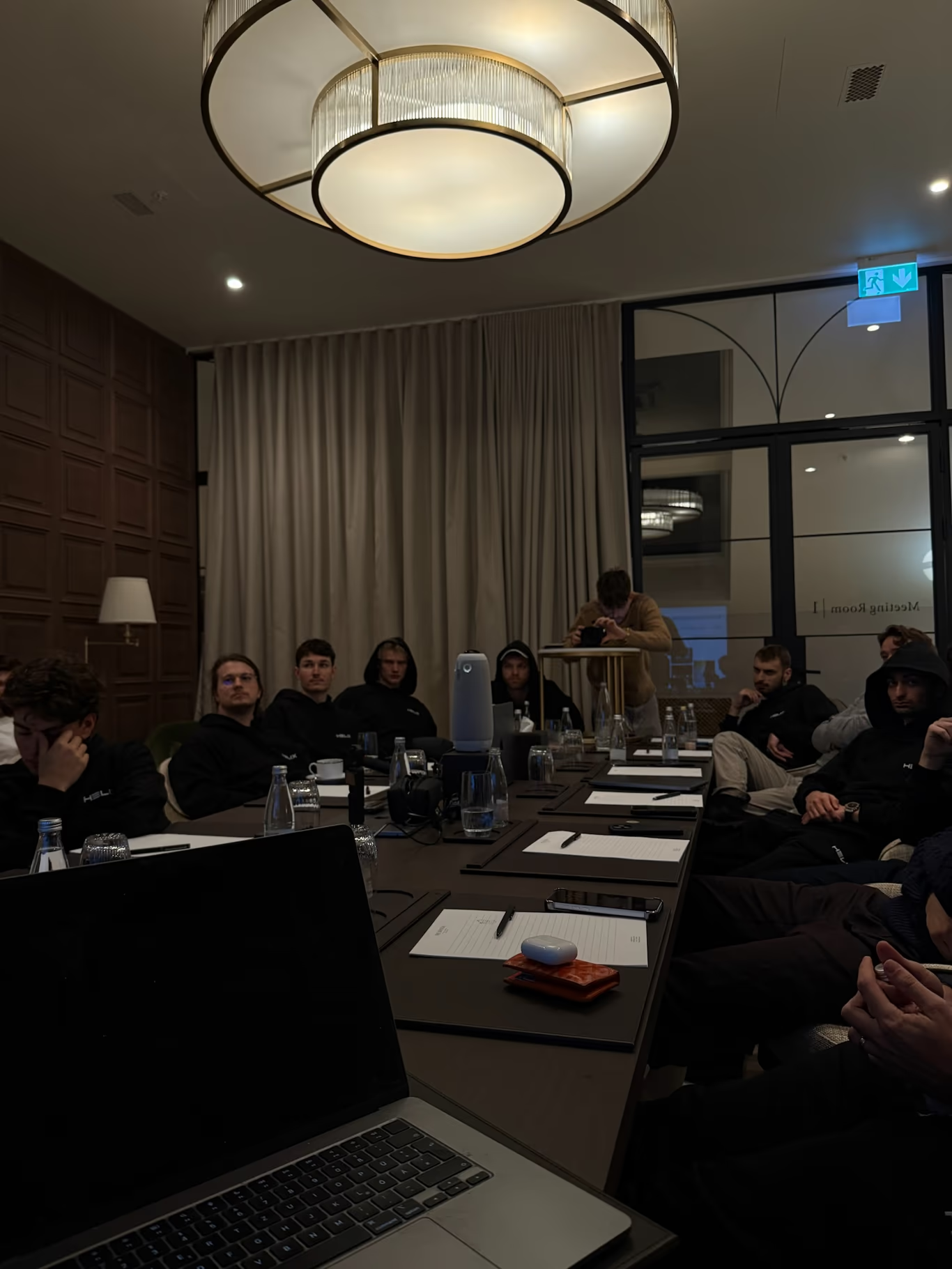
The physics break when stages mix too widely at one table, because a pre-revenue founder seated beside a $30M operator turns every hot seat into a masterclass, generous and useless in both directions. Match guests within one stage of each other, the same filter a vetted room applies before anyone books a flight.
Lined up side by side, each setting buys a different thing for the same evening.
| Setting | Speaking time per founder | Candor | What it optimizes |
|---|---|---|---|
| Mastermind dinner | 20 protected minutes in the hot seat | High, no recording | Honesty to the people |
| Conference panel | Coffee-break fragments by a badge scanner | Low, you are performing | Reach and audience size |
| Boardroom | Loyalty to a projected agenda | Medium, minutes are logged | Loyalty to the agenda |
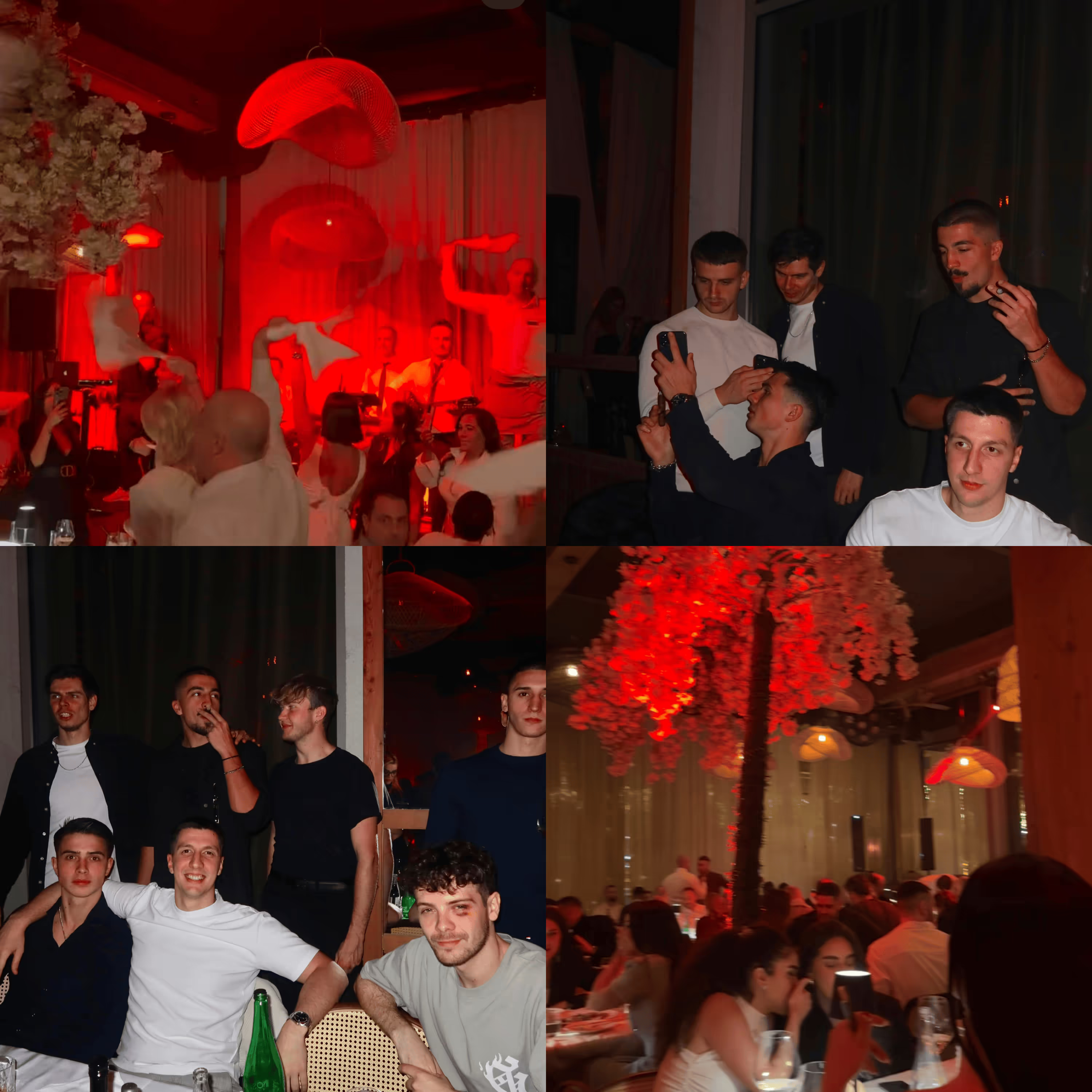
What does a real founder dinner agenda look like?
A real founder dinner agenda runs 90 minutes in six blocks: arrival pour, opening round, two hot seats, commitments round, close. The arrival pour owns the first 15 minutes, one drink and open seating, so the room settles before anything is asked of it. The opening round takes the next 15: one question for every guest, under two minutes each, host first to set the depth. Two hot seats fill the middle 40, twenty minutes each, where a founder lays out a live problem with real figures and the table takes it apart. The commitments round runs 15 more, every guest naming one action and one date, logged on paper. The close gets the final five, standing, next date set before anyone reaches for a coat. Helix tables have run that clock from Belgrade to Koh Samui since 2024. Steal it without attribution.
The clock runs the room so the host never has to raise a hand.
One question does the opening round's work, and the strongest versions ask for a number: the figure that moved most since the table last met, or the decision currently costing the most sleep. Questions about feelings produce weather reports; questions about numbers produce agendas. A founder who answers "churn jumped to 6 percent" has just nominated himself for a hot seat, and the table knows it before the plates clear. The two hot seats usually announce themselves that way. Pick them by urgency rather than seniority, and warn both founders before the meal so the figures arrive prepared instead of reconstructed. The agenda breaks when a third seat gets squeezed in, because 20 protected minutes shrink to 13 and every diagnosis stays shallow. A bigger queue means a second mastermind dinner, never a tighter clock.
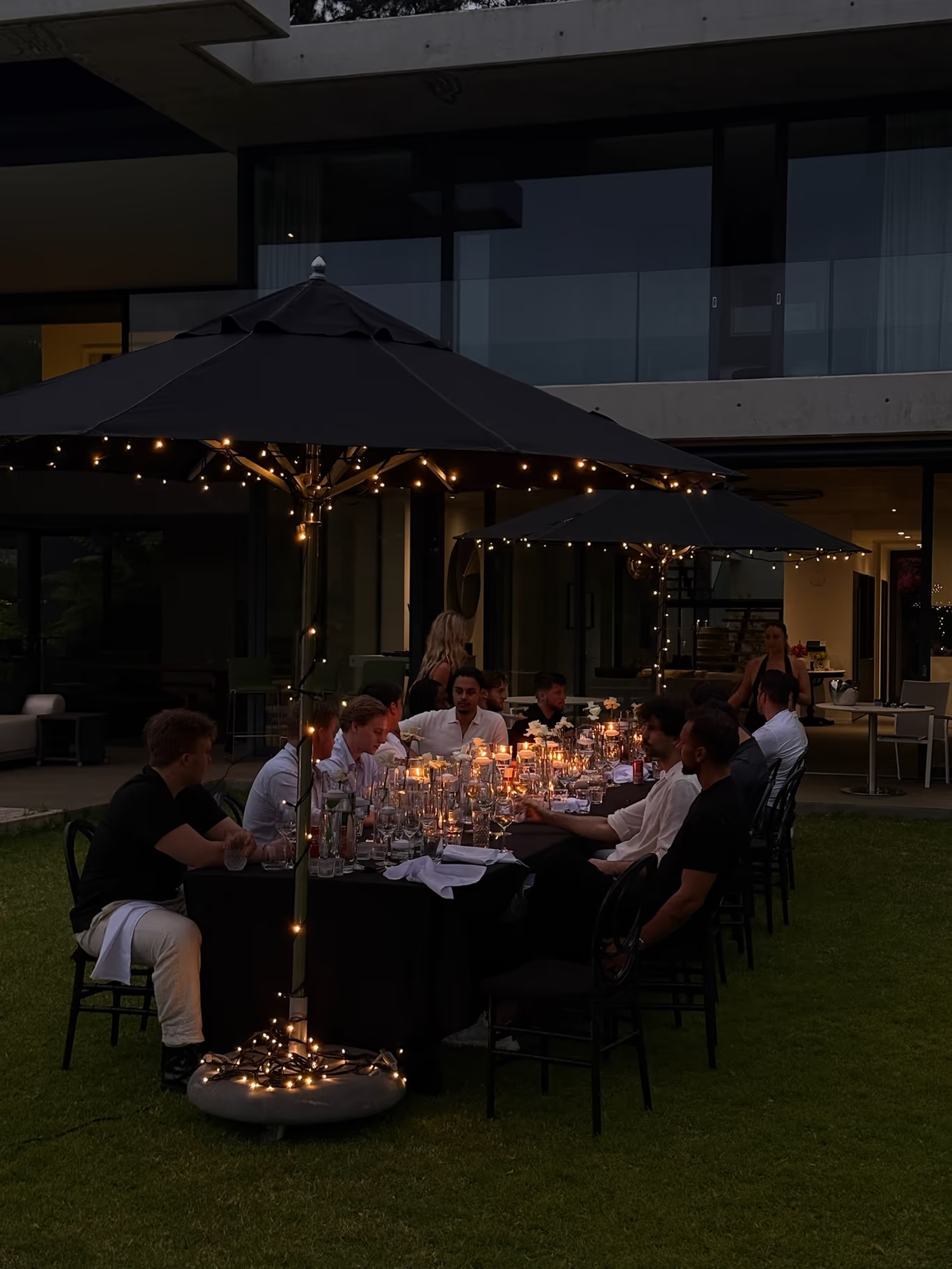
Use four filters to choose who takes the two seats:
- Urgency over seniority. The founder with the live, costly decision goes first, not the one with the biggest company.
- Numbers already in hand. Warn both founders at invite so figures arrive prepared, not reconstructed at the table.
- One stage of separation. A problem a pre-revenue founder cannot act on burns the slot for everyone.
- Fresh problem, not a rerun. Skip anyone replaying last dinner's situation with no new figure to show.
Interactive · The Table Script Builder
The Helix 90
Set the seats and the clock. Every block recalculates live; copy the script or print it for your own table.
Change the inputs above and the format exposes its own logic: more seats shorten each guest's opening slot and never add a conversation, while a 120-minute setting buys a third hot seat instead of longer speeches. Configure it, copy it, print it for your own table.
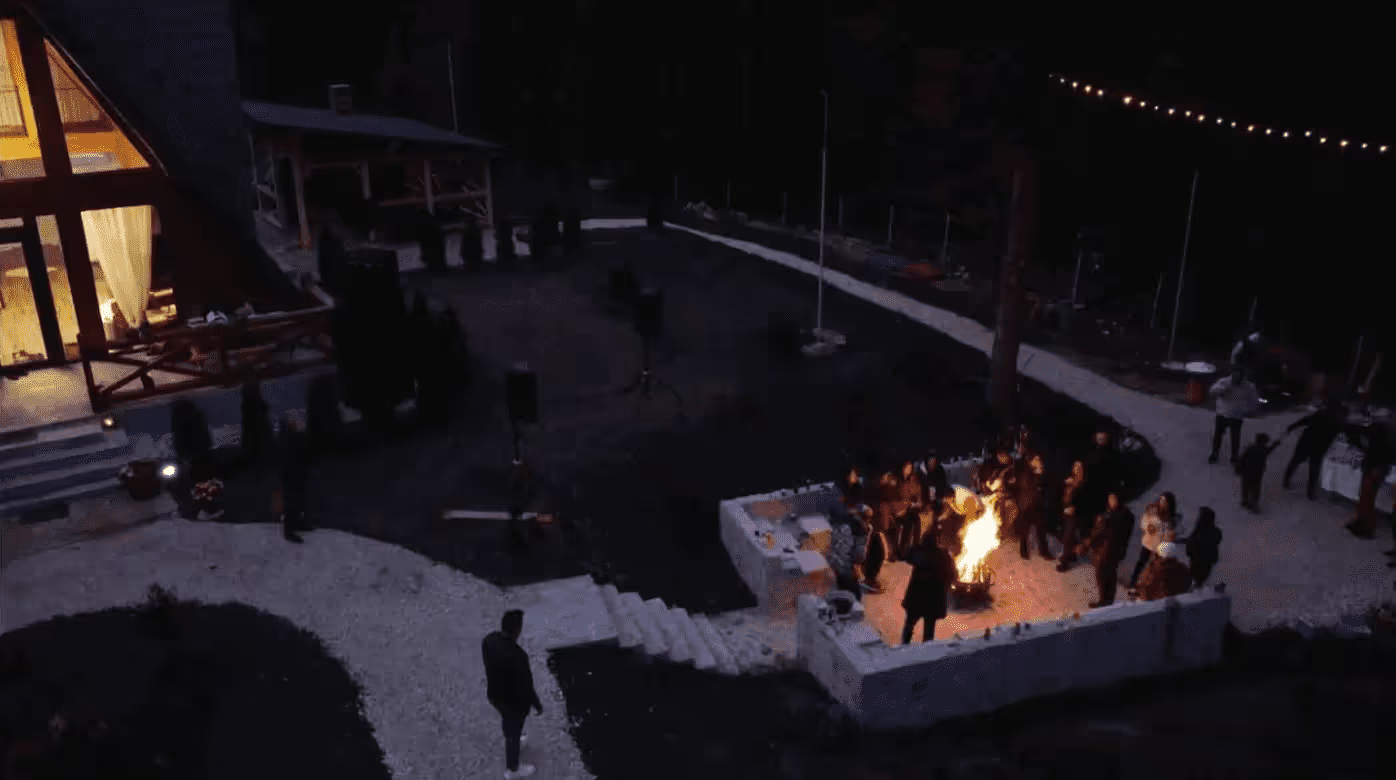
From the founder's journal
Most entrepreneurs won't get this type of feedback all year. Inside the room, guys get it weekly — the table rips apart your problem and hands you the fix in real time.
Danilo Ralić — “The Plug,” Helix founderHow do you run your own mastermind dinner?
You run your own mastermind dinner by enforcing three rules from the pour: table talk stays at the table, nobody pitches, real numbers or pass. State all three in one breath, as a house custom, not a contract. A rule announced at minute five costs nothing; the same rule mid-violation costs the evening its warmth. Passing is the release valve that keeps honesty voluntary, and a guest allowed one quiet pass volunteers the real figure two dinners later. Enforce by redirection, not confrontation: when a founder slides into pitch mode, hand the question back and ask the table what they make of his churn number, and the room corrects him. Repeat offenders never get a second invitation, the only punishment a dinner needs. Helix solves the harder half upstream, because Danilo Ralić (its founder) reads every application before a seat exists, and a reviewed list rarely needs policing.
The host's checklist runs shorter than the menu:
- Do cap the table at eight. The ninth chair costs more conversation than it adds.
- Do separate direct competitors. Nobody presents margins to a rival over bread.
- Do put the clock where everyone can see it. Visible time is enforcement nobody has to perform.
- Don't record anything. Notes live in the host's hand and on the commitments page only.
- Don't let the pour run long. A dinner that starts loose ends looser.
- Don't admit observers. Partners, juniors, and investors change what gets said, however charming.
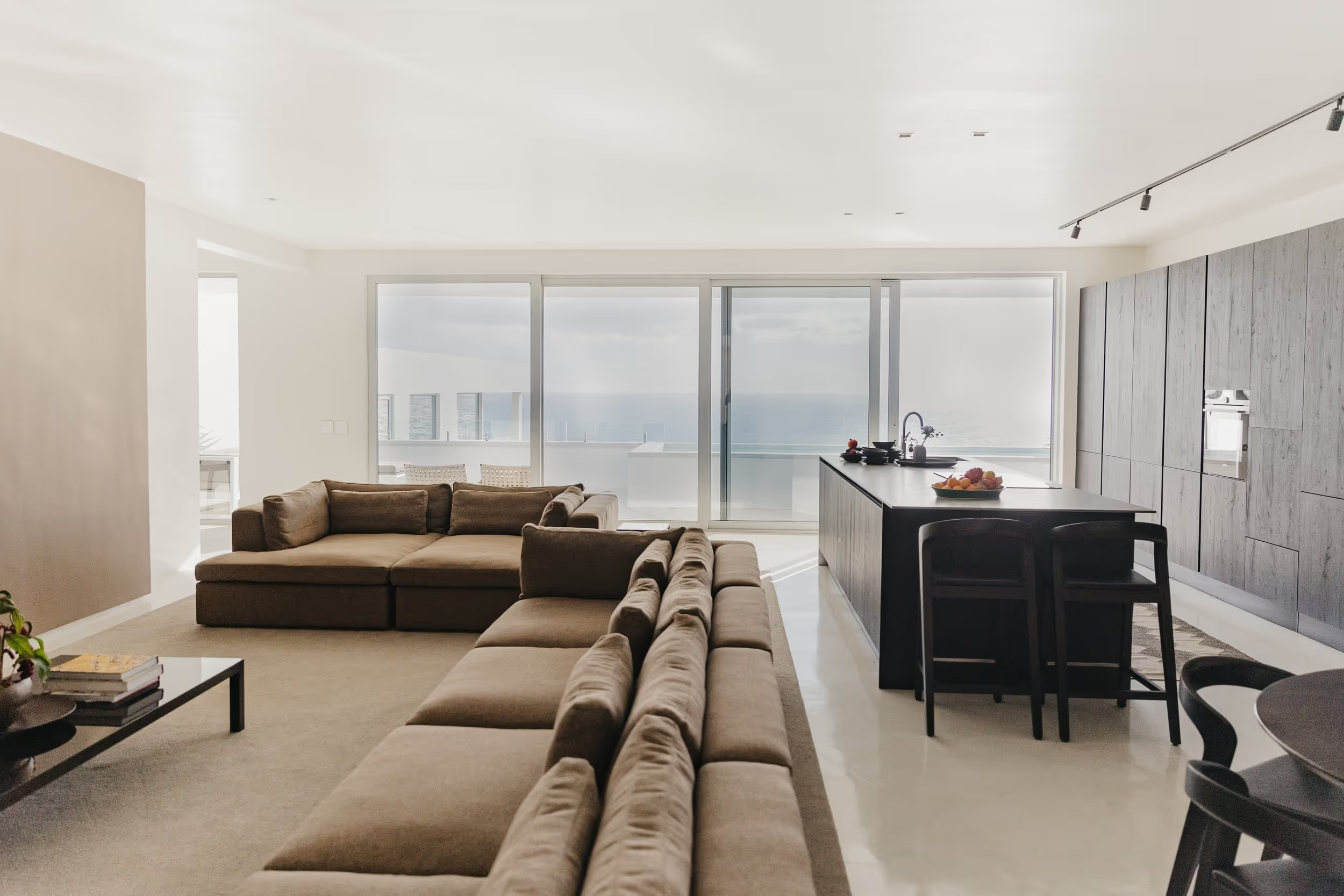
Pick the venue the way you pick a cofounder, for reliability under noise. A private room beats a corner table, a long table beats a round one, and a restaurant that holds the same room monthly beats a novelty spot. Acoustics decide more dinners than cuisine, because a room where seat one cannot hear seat eight has already split the conversation. Set one fixed date a month and let the date recruit, since operators plan trips, raises, and board meetings, and a movable dinner loses to all three. Lock that date a quarter out and the seats fill themselves; leave it floating and the strongest founders, the ones with the fullest calendars, drop first. The format survives a mediocre restaurant; it does not survive a moving target.
The script is portable; the people sitting inside it are not.
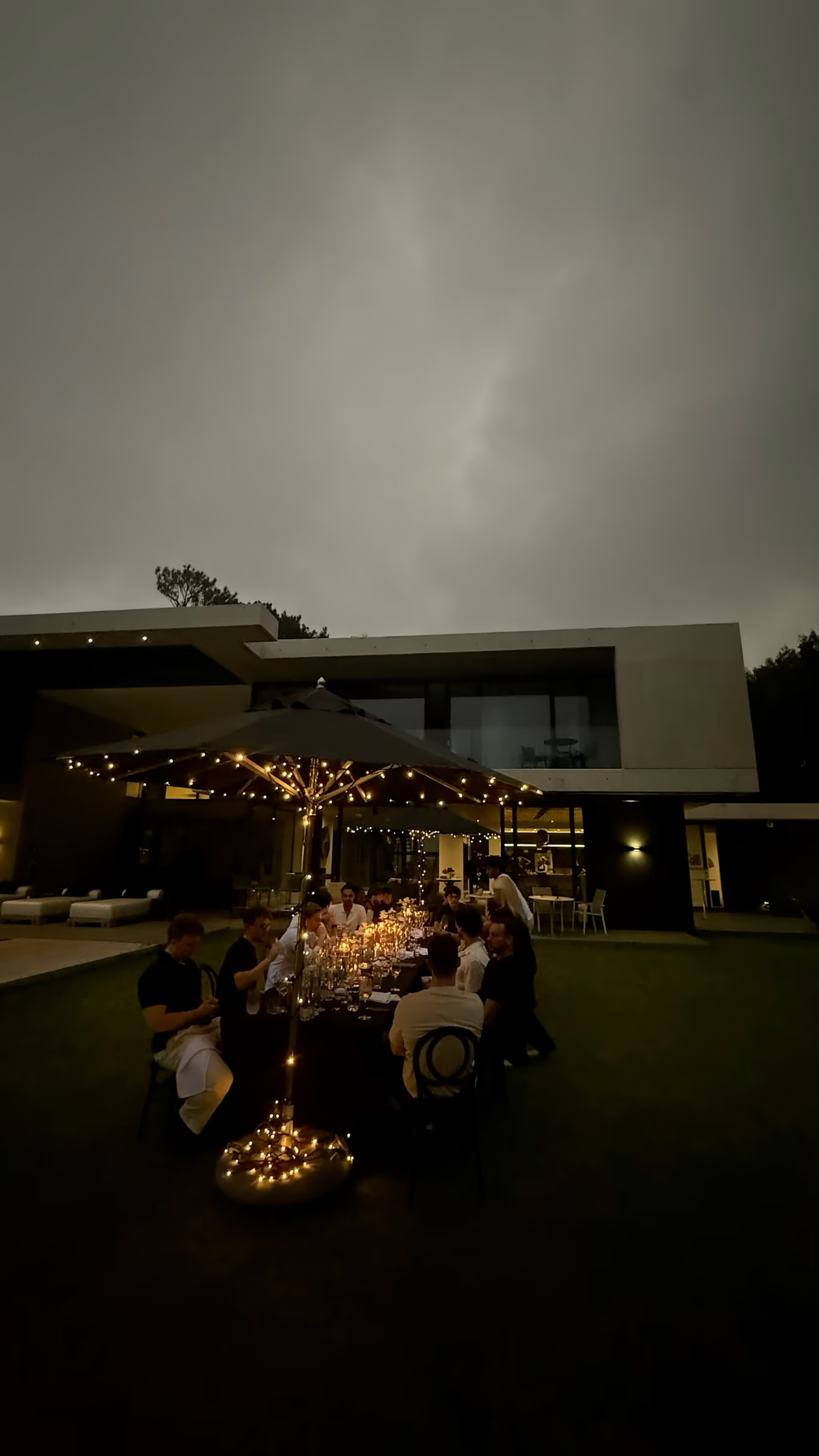
Identical agendas produce different outputs depending on who cleared the door. An open RSVP link fills seats with whoever clicked first, and the conversation prices itself to the least verified person present. A reviewed table starts at depth, because every guest already knows the other seven passed the same filter. Djordje Lazic (founder of Flowpouches) and Liam Clancy (founder of PlusHeat UK) hold two of the 11 named seats on the public roster, and the commitments they log get read back the next time the table is set, in the next city. That continuity separates a one-off dinner from a private founder community capped at about 100 reviewed operators. You can watch the same tables in motion across 12 public vlogs before you request anything.
Vetting is the one course you cannot order.
Three of the 11 named seats
 Djordje LazicFounder, FlowpouchesPublic roster · joinhelix.co
 Liam ClancyFounder, PlusHeat UKPublic roster · joinhelix.co
 Edvin KarlsonFounder, CruePublic roster · joinhelix.co
Two paths leave this page. Hosting is the better choice when you want control of the guest list and a format tuned to your city, and the vetting falls to you: the script above plus eight phone calls seats a first table inside a month. The cost is your time, eight calls and one booked room, against a list only as deep as your own network. Taking a standing seat is the right fit when you would rather inherit the list, since the same 90 minutes already runs wherever the open trip log lands next, inside the longer arc of a founder retreat where commitments outlive dessert. The trade there is control for reach: you give up the guest list and gain a room you could never have assembled alone. Price both honestly first, because mastermind groups publishes the cost math, and a mastermind dinner is the 90-minute version of a machine that also ships in annual sizes. Either path beats another conference badge.