Helix Journal · The Rooms · No. 11
 Danilo Ralić “The Plug”
How to Meet Other Founders at Your Level
How to meet other founders at your level comes down to filtration: pick rooms with real gates, because free entry already removed your peers. Anyone can meet founders in general; one ticket does it, and operators past seven figures know that too, which is why they are not there. The channels that work share one trait: a gate someone enforces. Three questions predict a room's peer density before you commit a dollar, and the densest channel is the one you only see from the inside.

Where are the founders at your level, and where are they not?
Founders at your level sit behind gates, inside rooms that screen for stage, and they are absent from everything free to enter. Filtered rooms hold the operators you came looking for; open rooms hold the people looking for you. That single sorting rule explains most of the disappointing events in your calendar history.
The mechanism is a stage threshold. Once a company clears seven figures, the founder's evening stops being free and starts costing whatever the business loses while he is out, so anything labeled networking gets cut first. The hunger for peers survives the cut; the search just moves behind gates, into hosted dinners, paid masterminds, vetted circles, and the referrals that pass between them. Open events backfill with whoever still profits from strangers: agencies hunting retainers, beginners hunting mentors, recruiters hunting everyone. Walk into a 120-person startup meetup and run the math. Maybe three attendees run businesses past $1M, and none wears a sign. Screening forty conversations to find one peer is the real ticket price, and no organizer prints it. The room was never built to filter.
Here is the full channel map, with the verdicts most lists are too polite to print:
| Channel | The gate | Peer density past $1M | Verdict |
|---|---|---|---|
| City meetup | None | Lowest | Free entry fills the room with people who need you, not people who match you |
| Coworking floor | A desk fee | Low | Pays for routine and proximity to work, never for proximity to operators |
| Conference | A ticket | Low | The hallway produces the value; the hall consumes the time |
| Hosted industry dinner | An invitation | Medium | Rises and falls with the host's curation |
| Paid mastermind | An invoice, to $25k a year at the top | Medium-high | Stage-filtered but content-led; you buy curriculum with peers attached |
| Vetted community | An application a person reads | Highest | Hardest entry on the list, and the only gate that compounds |
| Warm intro | Another founder's judgment | Highest per minute | The best single channel, and a product of the rooms above it |
Warm introductions outrank every channel in that table, and they are downstream of it: the founder who vouches for you has to be met somewhere first. Treat intros as the events-free layer of high-level networking, earned inside rooms rather than collected at them.
A warm intro is not collected at a room, it is earned inside one that already filtered for you.
Introverts read this map and assume it punishes them, when it actually points their way. A table of six with a shared thread beats a room of two hundred in name badges, because structure deletes the cold open that drains quiet operators. Recurring formats compound the edge: the third dinner with the same faces needs no approach at all, the architecture ceo peer groups are built on. Depth is where introverts already win, and small filtered rooms price depth above charm.
A few format swaps move the odds in a quiet operator's favor:
- Pick the small table over the big room. Six seats with one shared thread beat two hundred name badges, since you never have to start a conversation cold.
- Pick cadence over the one-off. A room you return to monthly turns strangers into the third dinner, where no approach is required at all.
- Pick a written application over a sign-up form. Answering on the page replaces working the room, which plays to depth instead of charm.
- Skip the booth and the badge line. Loud rooms reward fast talkers and produce contacts, not the slow trust introverts build best.
Choose dinners over expos and cadence over crowds, and the introvert penalty inverts into an advantage.
One caveat keeps the ranking honest: referrals mirror the room that produced them, so a junior circle refers junior founders and an upgraded room refers up. Upgrade the room before you ask it for names.

How do you qualify a room before you enter it?
You qualify a room before you enter it with three questions that predict its peer density: a stage floor, a human reading applications, and a cap on size. All three are checkable from a website in minutes, and marketing answers none of them. Run them on any room you are weighing and the verdict lands before you spend a dollar or an evening.
- Is there a revenue or stage floor? A floor guarantees the median conversation in the room; without one, the median is whoever had a free evening.
- Does a human read an application? Payment forms admit everyone they can bill, while a named reviewer admits only people he must later seat at the same table.
- Is the size capped? A cap makes every yes spend a scarce seat, which forces curation in a way no growth target ever will.
Score any room you are weighing on the calculator below; its four presets settle the meetup-versus-mastermind argument in two taps.
Interactive · Peer-Density Calculator
Score the room before you enter it
Set the four parameters of any room you are considering, or load a preset. The score estimates founders at your level per 100 people in the room.
Stage-blind room. You will meet people who need you long before you meet a peer.
Model estimate from four inputs, not a measurement
How Helix's members actually met the community
Member poll in progress — live data ships with it.
Helix (private vetted founder community, est. 2024) is the room this page can open from the operator's side, so run the three questions against it. The stage floor is set case by case: applications are judged on fit with the existing seats, not a fixed revenue line. The application is a four-minute Typeform titled Request a seat. Danilo Ralić (the founder) reads every one personally, with no automation and no panel between him and the form. The cap holds near 100 seats, and behind it sits a public roster of 70+ vetted operators with companies linked, named members like Liam Clancy (founder of PlusHeat, a UK heating company) and Edvin Karlson (founder of Crue). A gate that survives its own checklist in public is rare here. That is what the three questions are for: most rooms answer them by going quiet.
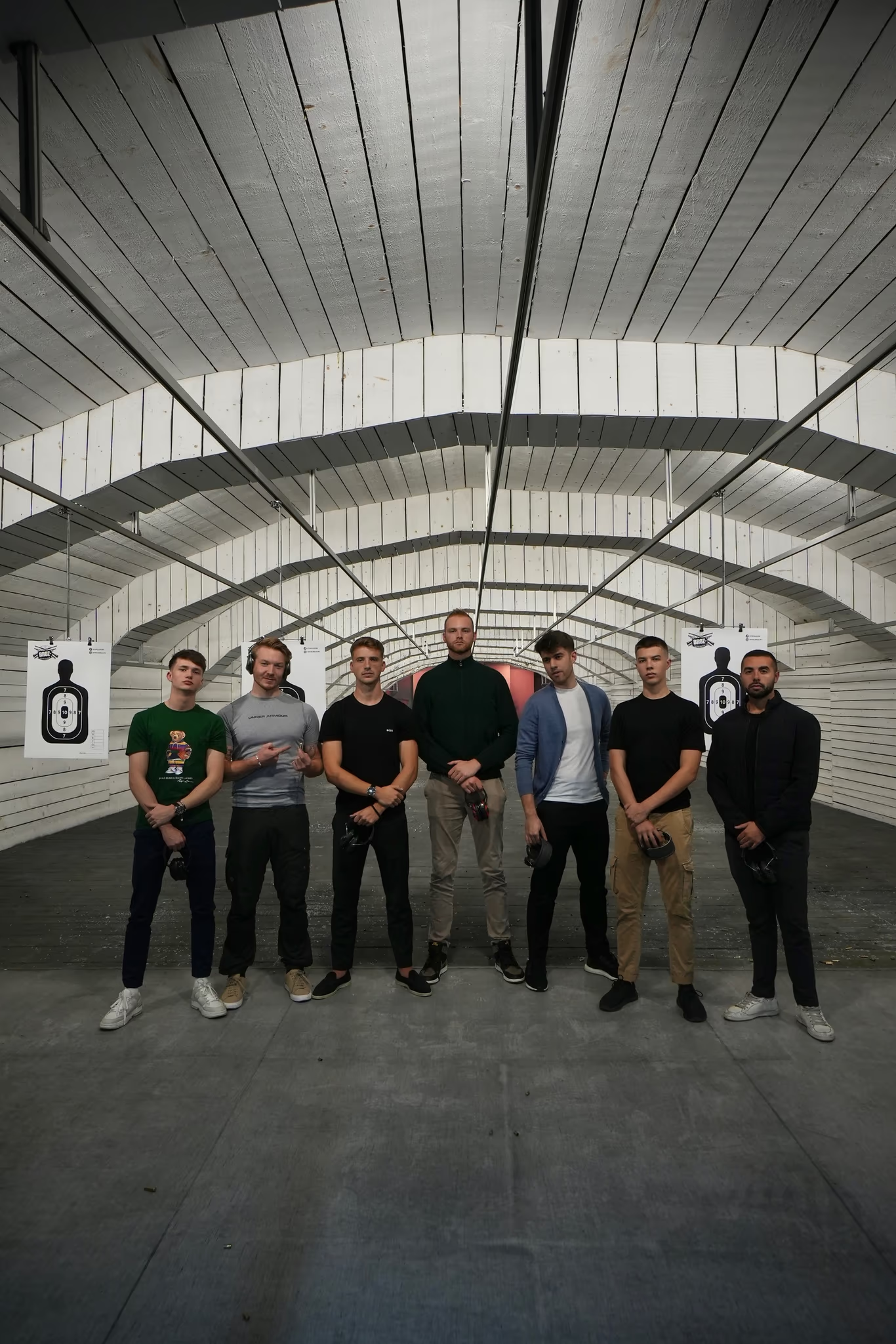
Some call the whole frame elitist, since strong operators stand in free rooms too. They do, occasionally. The objection confuses presence with findability. A $5M founder shows up at the odd 300-person mixer, and you hold no instrument for finding her before the bar closes. A gate never claims better people stand behind it. It claims a shorter search, and search time is the one budget no founder can refinance. Pay the gate or pay the search, and the second invoice arrives in evenings, across years. Free rooms win at exactly one job: deciding whether you want peers at all before anything is at stake.
Cold outreach to a named founder still works when the first message carries context only that person could verify, one number that proves your stage, and zero ask; you are signaling peer instead of pipeline. The move fails upward, though, because a founder ten times your size reads proof-of-stage as a mentorship request, whereas a true peer reads it as an introduction.

From the founder's journal
If you're serious about growth, stop grinding alone. Put yourself in rooms where people move differently — that's the real shortcut.
Danilo Ralić — “The Plug,” Helix founderHow do you turn a contact into a founder friend?
You turn a contact into a founder friend by seeing the same person again and again in unscheduled time, with no calendar slot forcing the meeting. Frequency was never the variable; the texture of the hours is. Trust accrues in the loose minutes nobody booked, not in the scheduled ones everybody guards.
Run the hour math on the two standard formats. A monthly video call gives two founders 12 scheduled hours a year, every one carrying an agenda. A four-day trip gives the same two founders 60-plus waking hours, most of them unassigned: the airport delay, the long dinner, the walk back to the villa. Unassigned hours are where the real questions surface, because nobody opens a margin problem in minute three of a calendar slot. That case is checkable against a public record, not a brochure. Helix has set its table across 60+ trips on 4 continents since 2024, Belgrade, Marbella, Cape Town, and Koh Samui among them, with 12 public vlogs on YouTube (@helix-vlogs) showing the format before anyone applies. Watch one and count the name badges. The compression breaks only when a trip ships with an agenda in fifteen-minute blocks, because a conference with palm trees is still a conference.
The same calendar year of contact buys wildly different depth depending on the container it sits in. Total hours matter less than how many of them nobody scheduled.
| Format | Contact hours / year | Share that is unassigned | What it builds |
|---|---|---|---|
| Group chat or DMs | ~3 (editorial estimate) | High but shallow | Reachability, rarely trust |
| Monthly video call | 12 | Near zero, all agenda | A standing update, not a friendship |
| Quarterly one-day summit | ~32 | Low, scheduled in blocks | Acquaintance with a face attached |
| Four-day trip, three times a year | 180-plus | Most of it | Founder friendships that move revenue |
Hours alone do not convert. Unassigned hours do, which is why the trip row outruns the call row by far more than its raw total suggests.
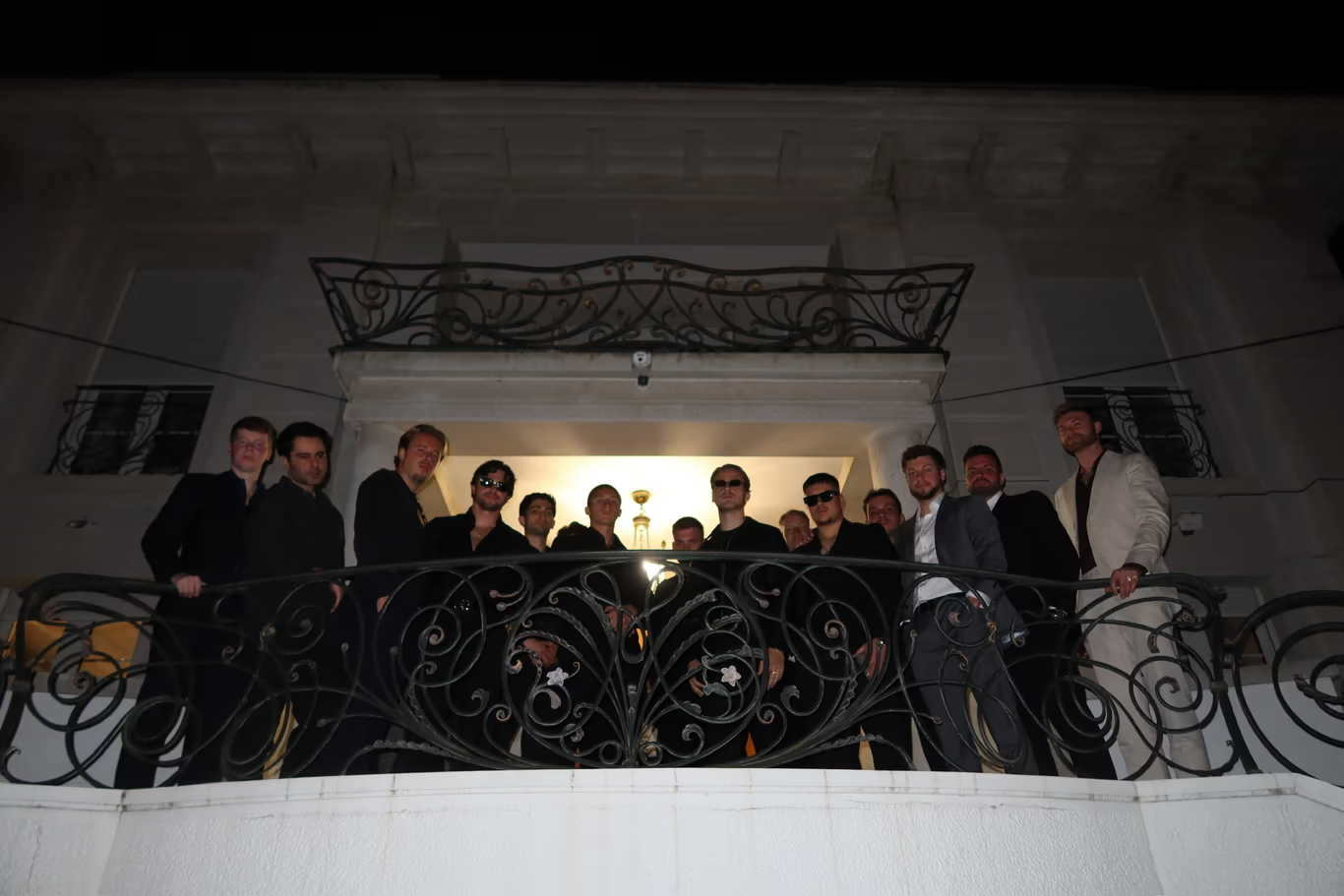
Trips are repetition with the calendar removed, which is the entire trick.
Proof that the dense channel converts sits in one attributable number. A sports-education founder went from $200k to $2M in annual revenue within twelve months of introductions made at a Helix table, growth the room can claim because the connections happened at it. When one relationship can move revenue tenfold, the right fit is worth applying for once instead of browsing for indefinitely.
The honest answer to how to meet other founders at your level fits in one sentence: pick the densest room you can qualify for, then let repetition compound it. Pair the seat with accountability structures that hold, and read why founders get lonely before you shelve the whole project for another quarter.