Helix Journal · The Bonds · No. 10
 Danilo Ralić “The Plug”
Why Are Founder Friendships So Hard to Keep?
Founder friendships are so hard to keep because building a company strips out the three conditions they run on: discretionary hours, shared context, and matched stakes. What erodes is the strategy itself: every warm introduction, candid correction, and saved quarter traces back to a handful of people who actually know you. The ratio nobody prints explains why they are scarce: five hundred contacts, three friends. Contacts accumulate on their own, every launch and conference adding names unasked. Friendship compounds only when somebody engineers its conditions, which almost no one does on purpose. So the count quietly inverts: the contact list runs into the hundreds while the friend list shrinks to a number you can say out loud.
This page traces the whole mechanism: what the company quietly did to your old friendships, the three-variable formula that builds new ones, and what one table does with that formula on purpose. An audit waits at the end; bring honesty.

What happens to your friendships when you start a company?
When you start a company, your friendships thin in a fixed order: hours go first, shared context second, ease last. The hours go because a young company eats evenings and weekends for years, and friendship at every age runs on discretionary time. Context goes next and quieter. Your week now holds payroll anxiety, a personal guarantee, and a pricing call that will not resolve, none of which translates across a table where everyone else is paid on the first. Ease leaves last and stings most: every catch-up needs footnotes, and supplying them feels like work, so you compress the quarter into "busy, but good" and ask about their kids. No one fought. The calendars just stopped overlapping.
Nobody cancels these friendships out loud; the calendar quietly does it for both of you.
LinkedIn stops counting in public at 500+ and sells the badge as an achievement, yet no platform shows a would-take-your-midnight-call count. Contacts are countable, displayed, and self-accumulating; friendship is slow, private, and immune to volume, so one list grows while you sleep and the other shrinks unless someone acts.
Celebration is the cleanest test of which list a person sits on. Share a real win with a number in it and read what comes back: an ask riding the congratulations marks a contact, joy with no agenda marks a friend. Most operators run that test once and find the friend list fits on one hand, fingers left over.
A few signals sort the two lists faster than any contact count:
- They reach out between asks. A friend checks in on a random Tuesday; a contact surfaces only when they need something.
- They already know the hard number. A friend can name the metric eating your week; a contact knows your title and your logo.
- Their congratulations carry no invoice. Joy with nothing attached marks a friend, an ask riding the reply marks a channel.
- They show up when it costs them. A friend changes a plan to be there; a contact sends the calendar link and a reschedule.
One pattern resists the drift: the old friend who carries real stakes of their own survives the transition, because their context translates itself, which previews the formula the next section makes explicit.
Some say the fix is effort: schedule the dinners, send the texts, refuse to let it lapse. Effort does preserve warmth, and warmth is worth keeping on its own terms. What effort cannot restore is shared stakes. You can love someone and still have nothing speakable about the decision eating your week, because they have never had to make one like it. The bond is intact; the part that carried weight is gone. Keep the old friends, and stop billing them for a job they never applied for. The thin calendar that results has a name, and founder loneliness maps what it costs in decisions rather than moods.
How do real founder friendships actually form?
Real founder friendships actually form by stacking three variables: time in one room, a calendar that repeats it, and comparable risk in every chair. Remove any one and you get an acquaintance at best, an audience at worst.
According to Jeffrey Hall at the University of Kansas (2018), a casual friendship forms near 50 shared hours, a friendship near 90, and a close one past 200. Price the default founder calendar against that bar: one 90-minute coffee a month banks 18 hours a year. At that pace a casual friend takes three years and a close friend takes over a decade. The math explains what willpower never could. Nothing is wrong with you; the container is too small.
Two hundred hours at coffee pace is an eleven-year construction project.
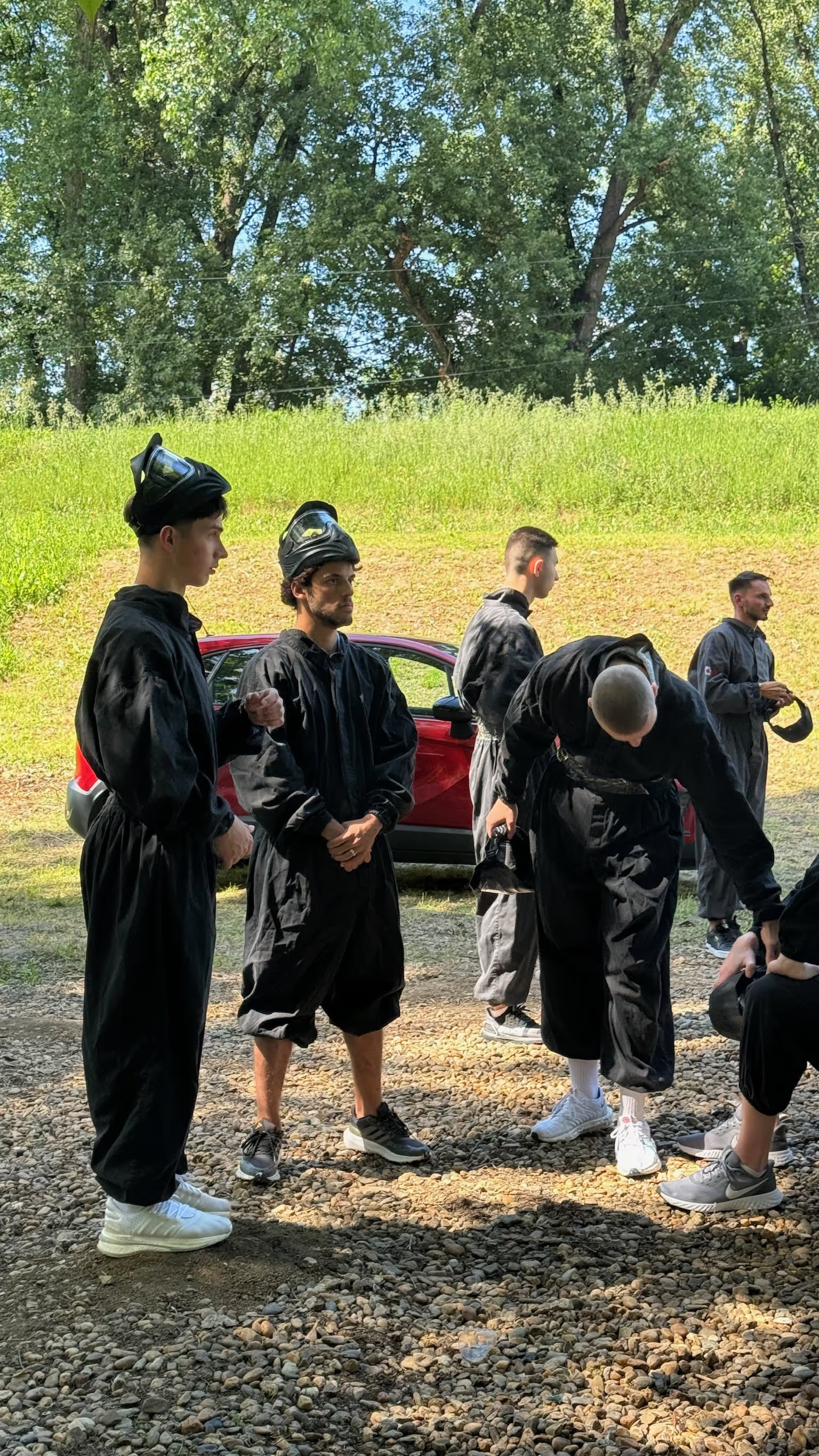
A multi-day trip rewrites that arithmetic, which is where founder friendships actually get built. Four days in one villa bank 50 to 60 waking hours. Breakfasts before anyone performs, long drives, the conversation that only lands after midnight on day three. One trip delivers what five years of monthly coffees would, before either side's guard rebuilds. Helix (a private vetted founder community, founded 2024) runs that compression on purpose: Belgrade, Marbella, Cape Town, Koh Samui, Bucharest, Tivat, and Albufeira in the trip log, plus Miami, Tulum, Bali, and Spain on film, 60+ trips across 4 continents in 12 public vlogs (channel @helix-vlogs). Watch two back to back and the point surfaces on its own: the same faces keep reappearing, trip after trip. Repetition you can verify in public footage is the one community claim marketing cannot fake. The full record sits in entrepreneur group trips, and founder retreats walks through what a single one holds hour by hour.
Proximity and repetition still need the third variable, because founder friendships run on matched risk, not shared hobbies. A weekly squash partner can know you for years and never learn your margins; nothing in the room forces the real subject. Stakes force it: when every chair carries payroll and personal exposure, the conversation defaults to true, the condition founder communities build in structurally and founder travel groups price into the seat. The formula breaks when the room reshuffles, which is the quiet defect of conferences: proximity at industrial scale, a fresh crowd every session, hours that never land on any one person. Twelve dinners with the same eight operators beat a hundred events with a thousand attendees, and the gap is not close. Pick depth instead of reach whenever the calendar forces the trade.
Run the three common formats against the formula and the math, not willpower, explains which one builds a friendship.
| Format | Hours banked | Repetition | Matched stakes | What it builds |
|---|---|---|---|---|
| Monthly coffee | ~18 per year | Same person, tiny dose | Varies by guest | Casual friend in roughly 3 years |
| Conference | High per event | Crowd reshuffles each session | Mixed, mostly unknown | Contacts, rarely a friend |
| Multi-day trip | 50 to 60 per trip | Same faces, trip after trip | Every chair carries payroll | Close friendship inside a year |

From the founder's journal
Stop networking and start building actual relationships. Networking asks “what can you do for me?” A real relationship asks “how can I help you win?”
Danilo Ralić — “The Plug,” Helix founderWhy is friendship the real strategy?
Friendship is the real strategy because the asset that compounds is a bench of people who know your numbers and your name. Channels saturate and playbooks leak the week they work; a bench of real friends at real stakes keeps producing what no funnel can.
One attributable outcome shows the order of operations. A sports-education founder went from $200k to $2M in annual revenue inside twelve months, after introductions made at the Helix table. The sequence ran in that order: friendship first, then the introductions, then the revenue. A vouch spends the voucher's reputation, and nobody spends reputation on a stranger from a mixer. Treat the introduction as interest, never the principal. The principal is the person who picked up.
Trust at that depth requires a gate, which is why vetting precedes friendship instead of cheapening it. Candor needs to know who is listening. Danilo Ralić, the community's founder, reads every application personally; the form is a four-minute Typeform titled Request a seat. The cap holds near 100 members so the names stay knowable, the same reason a dinner table stops at twelve. Filter hard at the door, and nobody inside ever has to perform. Hard to join, easy to belong.
Engineering friendship draws one standing objection: it sounds transactional, networking in warmer clothing. The objection aims at the wrong layer. What gets engineered is conditions, not people: the calendar that puts the same faces in one villa, the room where every chair carries payroll, the gate that lets candor relax. None of that scripts a single conversation. The hours inside those conditions still have to be lived, and a founder who shows up performing gets read as performing within a day. You can build the room; you cannot fake the friendship once you are in it.
You cannot outsource the hours; you can only choose where they land.
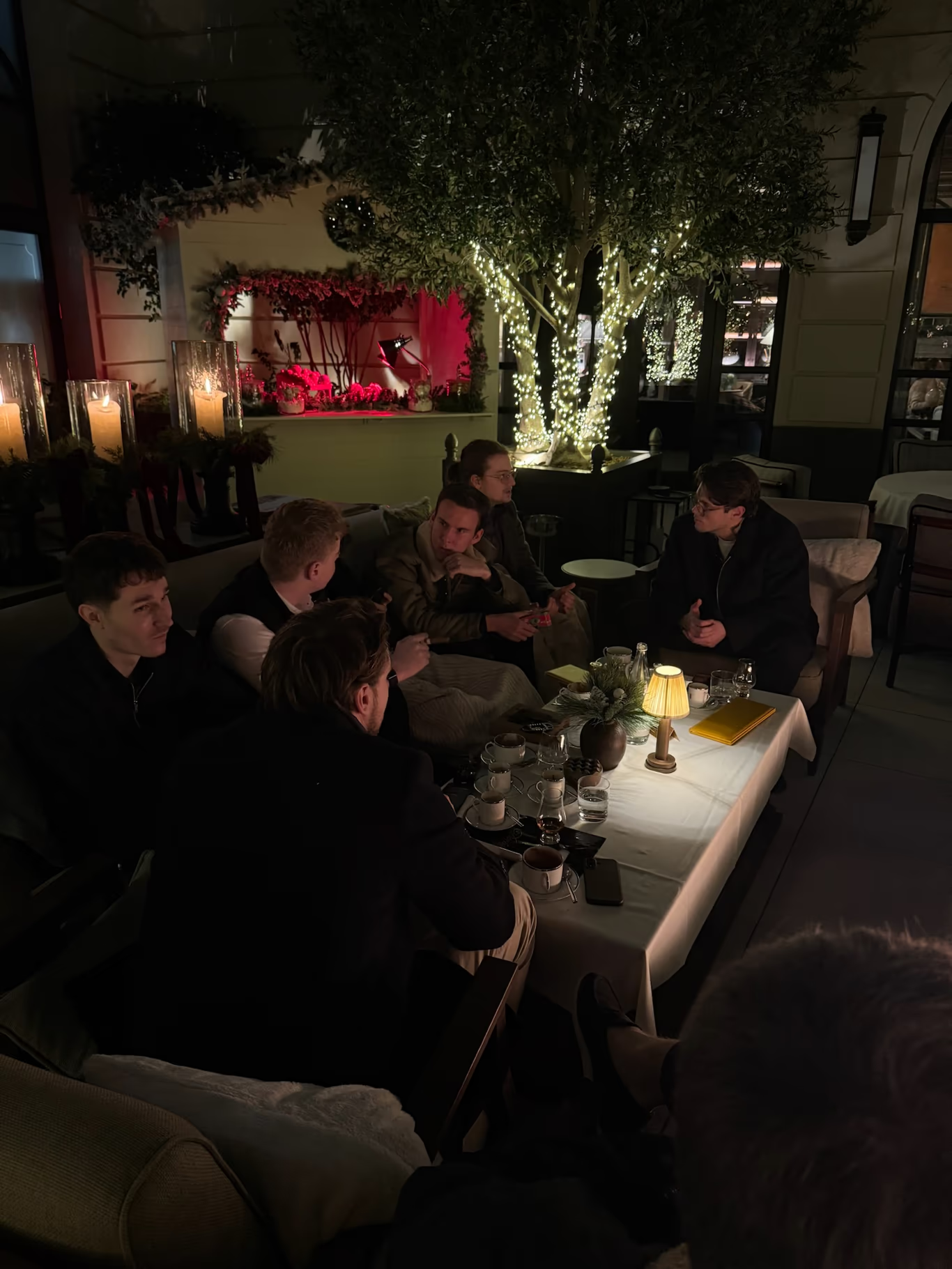
Pick the rooms for next year before the calendar fills itself with one-off events nobody remembers by spring. Four rules cover most calendars.
- Protect two old friendships like board meetings. Standing dates, recurring on the calendar, with no agenda and no shop talk owed.
- Audit every recurring room for all three variables. Proximity without repetition is a conference; repetition without stakes is a hobby.
- Spend the travel budget on the same people twice. Compounding starts on the second trip, when nobody is new anymore.
- Retire rooms that fail the celebration test. Wins that draw asks instead of joy mark a sales channel, not a circle.
Where to find candidates is its own discipline, and the channel ranking in meet other founders sorts the options by founder density rather than convenience. The audit below sorts something harder, namely what you already hold: five questions, five chairs, one honest count.
Interactive · The 500:3 Audit
Contacts vs friends: five chairs
Type a first name, or be honest and tap "No one". Every name takes a chair. Nothing you type leaves this page.
Question 1 of 5
Who takes your 2 a.m. call?
You seated 0 of five chairs.
"Most founders have five hundred contacts and three friends."
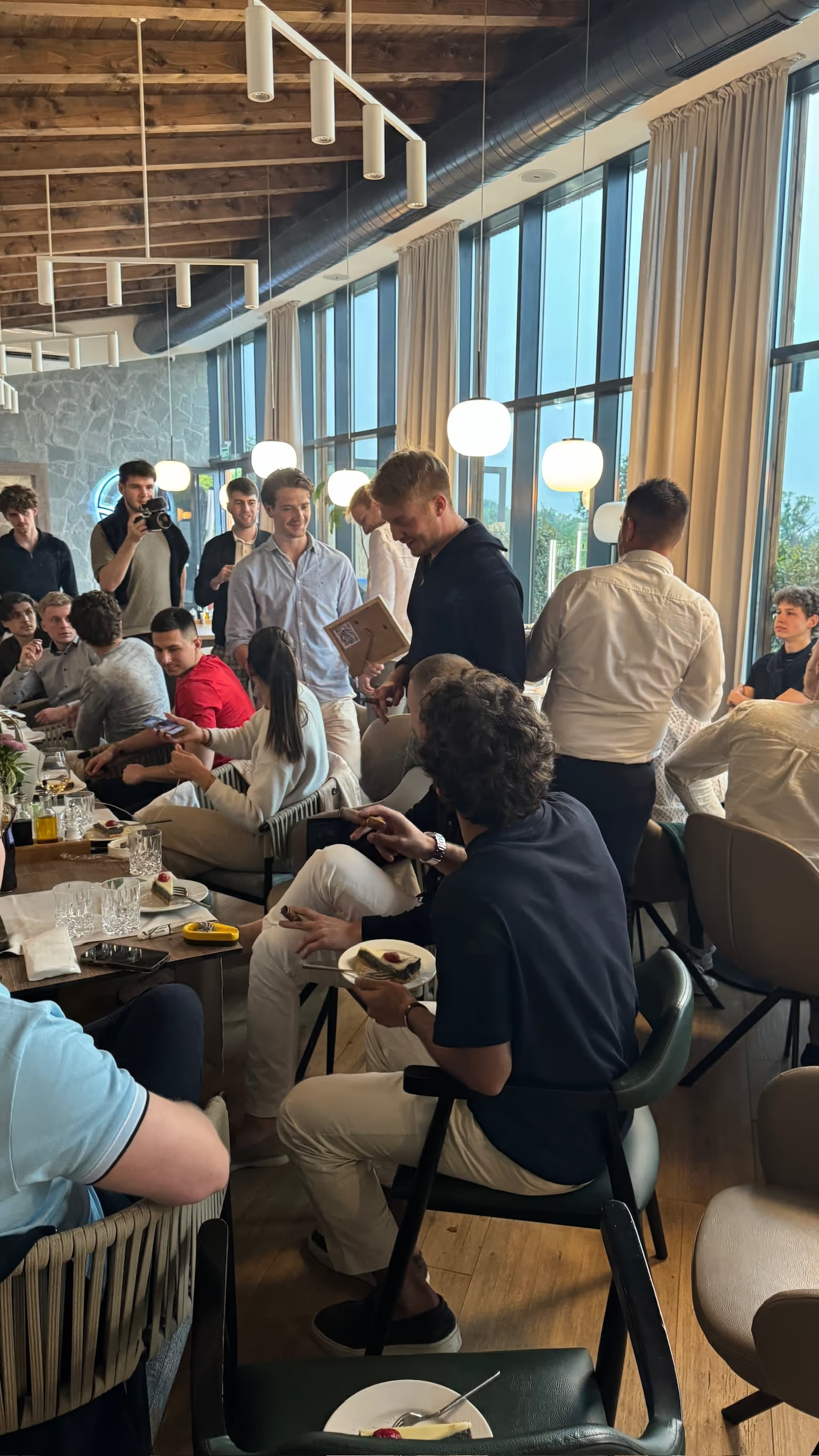 Belgrade
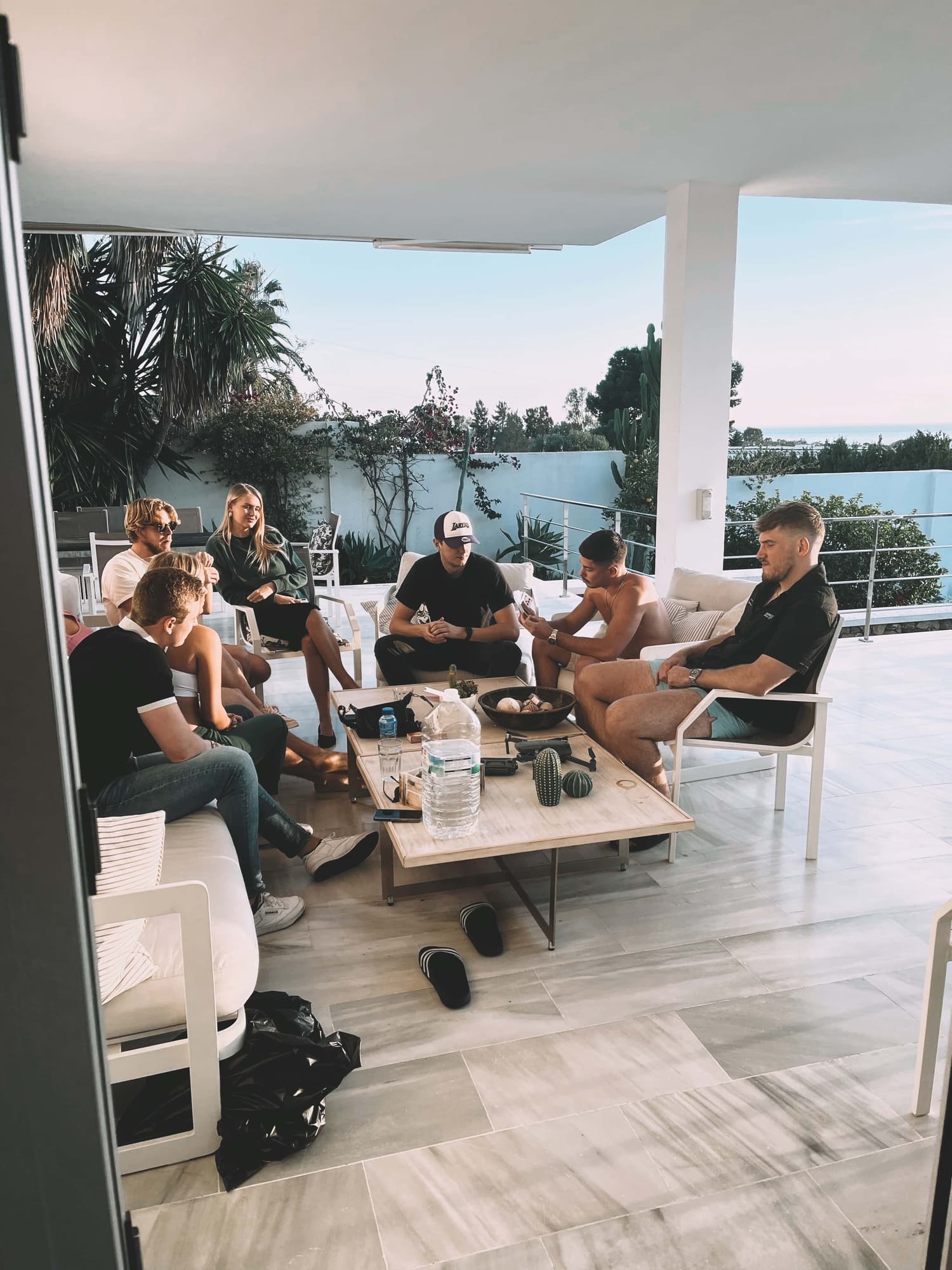 Marbella
 Cape Town
 Koh Samui
 Bucharest
 Tivat
Tivat
 Albufeira
Miami
Tulum
Bali
Spain
Albufeira
Miami
Tulum
Bali
Spain
The friendship is the strategy
Companion number · "How many people inside the community would you genuinely call at 2 a.m.?" across the ~100 seats
Member poll in progress — live data ships with it.
Most sessions of this audit seat two or three chairs of six, the headline ratio rendered in furniture, while Helix asks its roster the companion question and ships the median here the day the poll closes; until then the panel says so plainly: member poll in progress. The argument holds without that number: founder friendships compound or they decay, and the only lever you hold is the conditions, which is the entire reason a private founder community of about 100 vetted seats exists.