
Helix Journal · The Rooms · No. 5
 Danilo Ralić “The Plug”
How to Join Helix: What Gets a Yes at the Table?
How to join Helix is a four-minute application, one personal read, and one conversation, and what gets a yes at the table is an operating business, a give-first answer, and a willingness to travel — no committee, no automated scoring, no sales call. The cap sits near 100 seats on purpose in this private vetted founder community, founded 2024, and founder Danilo Ralić reads every application himself. Each question screens for one thing, a yes turns on contribution rather than size, a no goes to ideas and takers, and the first 90 days run on dinners and travel.
The tagline is policy rather than poetry: hard to join, easy to belong.
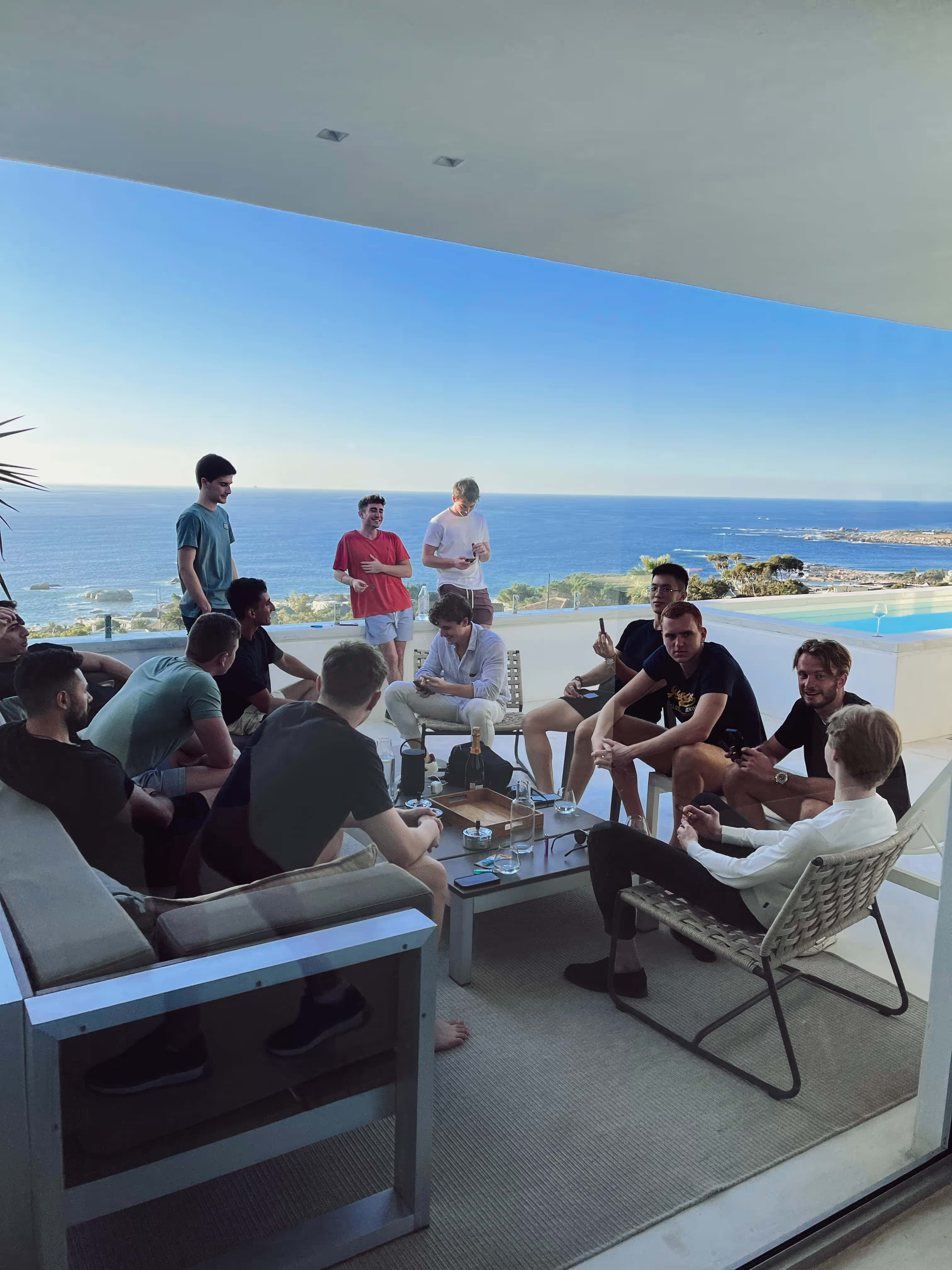
What does the Helix application ask?
The Helix application asks three things: what business you operate, where it honestly stands, and what you would bring before what you would take. The four-minute form lives on Typeform under the title Request a seat, linked from the homepage of the private founder community. Each prompt maps to one judgment the reviewer makes, so bluffing any of them wastes your four minutes and his. The name and company line is checked against the public roster, not taken on faith. Stage is not a revenue gate. The roster spans operators from seven figures to past $30M a year, so the bar is honesty at your scale, not size. Contribution carries the most weight of the set, because a give-first answer is the one thing a table of operators cannot manufacture without you. The order of the prompts is deliberate too. You are asked what you would bring before what you would take, and the reviewer reads that answer hardest.
| The form asks about | What the reviewer reads in it | What ends an application here |
|---|---|---|
| Name and company | A footprint that can be checked, since the roster is public | Anonymity, or claims with no trace |
| The business you run | Customers and operations in the present tense | An idea still living in a deck |
| The stage you have reached | Plain numbers, stated without inflation | Adjectives standing in for figures |
| What you would bring | A give-first answer: a market, a skill, a scar | A wish list of things to extract |
Read the third column twice before you type: every entry there is survivable somewhere else, and none of it survives here.
Lasse Flagstad (founder of B2B Growth) answered the same prompts every applicant sees, and his name now sits on a public roster of 70+ members and their companies. A yes here is verifiable, not claimed; you can read the list before you ever apply.

A yes goes to an operator running a real business, whatever its size, with a give-first answer ready and a passport they intend to use. Members have boarded planes for Belgrade, Cape Town, and Koh Samui dinners, so willingness to travel is screened as seriously as revenue. The roster spans e-commerce, SaaS, agencies, marketing, and investing, so fit is judged on temperament, not industry. A no goes to ideas without operations, to takers, and to networkers collecting contacts they will never call. One applicant type breaks the form every time: the founder who treats it as a pitch deck, selling upside to a reviewer reading for substance. Nobody here is buying equity, so selling is the wrong register. Answer the way you would answer a peer who will know your numbers by the second dinner, and choose plain statements over polish. Polish is what the no pile is made of.
Operators get read in this process; pitch decks get filed politely.

How does the Helix vetting process work?
Helix vetting works by putting one reviewer at all four steps: submission, personal read, conversation, and decision. Your application lands with the same person who founded the community in 2024 and built its roster name by name. No committee scores you, no software ranks you, no assistant filters the queue before he sees it. A conversation follows when an application holds signal, and it runs operational, not ceremonial: what you build, what you carry, what you would ask a table of operators first. Applications are read in the order they arrive, and nothing on the form lets one jump the line. The decision answers one question, whether the conversation gets better with you in a chair. Compared to the funnels at large paid networks, this one trades speed for judgment on purpose. You can read how vetting works across this category and hold any room to that bar.
One reader cannot scale. That is the design, not a flaw: a cap near 100 seats bounds the reading load for good, so the bottleneck never widens. Committees average their members' taste into a safe middle, and five screeners make the standard whoever was on shift. One named reviewer keeps it singular, accountable, and attached to a name you can question.
The table below sets this gate against a large paid network so the trade is plain before you spend the four minutes. Pick the row that matches what you actually need this quarter.
| What you compare | This vetted gate | A large open or paid network |
|---|---|---|
| Who decides | One named founder, accountable for every seat | A team, a form score, or an automatic approval |
| Time to a yes | Days for the read, longer if seats are full | Minutes to instant on payment |
| What clears the bar | An operating business and a give-first answer | A card that clears and a filled-in profile |
| Room size | Capped near 100 seats on purpose | Thousands, growth is the model |
Speed is the one thing this gate gives up, and it gives it up on purpose.

Expect the form to take four minutes, the read to take days rather than minutes, and the conversation to be scheduled the way two operators schedule anything, around real calendars. A capped room adds one honest wrinkle: when every seat is taken, a qualified yes waits for one to open, and no payment moves anyone up the queue.
Edvin Karlson (founder of Crue) cleared this exact sequence, and so did the 70+ founders named publicly beside him on the roster. The process breaks for anyone who needs a room by Friday; choose a large open community for speed, because this gate will not hurry, and nothing about how to join Helix rewards urgency.
The queue moves at human speed because a human being is the gate.

From the founder's journal
From wild nights and chaos, to pulling up to each other's weddings, to raising families and building empires together — that's the vision. It all starts at the table.
Danilo Ralić — “The Plug,” Helix founderWhat happens in your first 90 days at the table?
Your first 90 days at the table hold three things: a public introduction, a first dinner, and a seat on the next trip. The introduction happens on Instagram, where @helixcircle announces each new member by name and company, the same format every current member once received. The first dinner turns a roster line into faces. The first trip does the heavier work, because this table has been set across 60+ trips on 4 continents since 2024, from Bucharest to Tivat to Albufeira. You can audit the whole rhythm before applying: the trip log lists where the table has traveled, and 12 public vlogs on YouTube (@helix-vlogs) show the dinners and the people in them. The introduction post, the dinner, and the trip all happen in the open, so onboarding asks for no faith. The cadence is the same one every seated member moved through. Watch one vlog end to end and you have previewed your own first quarter.
One outcome shows what those 90 days can start: a sports-education founder grew from $200k to $2M in annual revenue inside twelve months, on introductions made at this table. That number is attributable, which is why it is the only one framed as a result. Wins members built before arriving stay credited to the members, never to the room. The quieter compounding is what a seat does on its own schedule: founder friendships with people who will still know your real numbers in five years.
Spend the window deliberately and the seat starts paying early. Treat the first quarter as a short checklist, not a vibe:
- Arrive carrying one specific problem, stated in numbers, because vague questions only ever collect vague help.
- Offer an introduction before you request one, since give-first is the operating norm the vetting just selected you for.
- Say the real figure when someone asks how the quarter went, because calibrated answers are the entire point of a vetted room.
- Book the next trip on the calendar, whatever the destination, and put the date in before the excuses arrive.
Ninety days of showing up beats nine months of lurking in any community on earth.
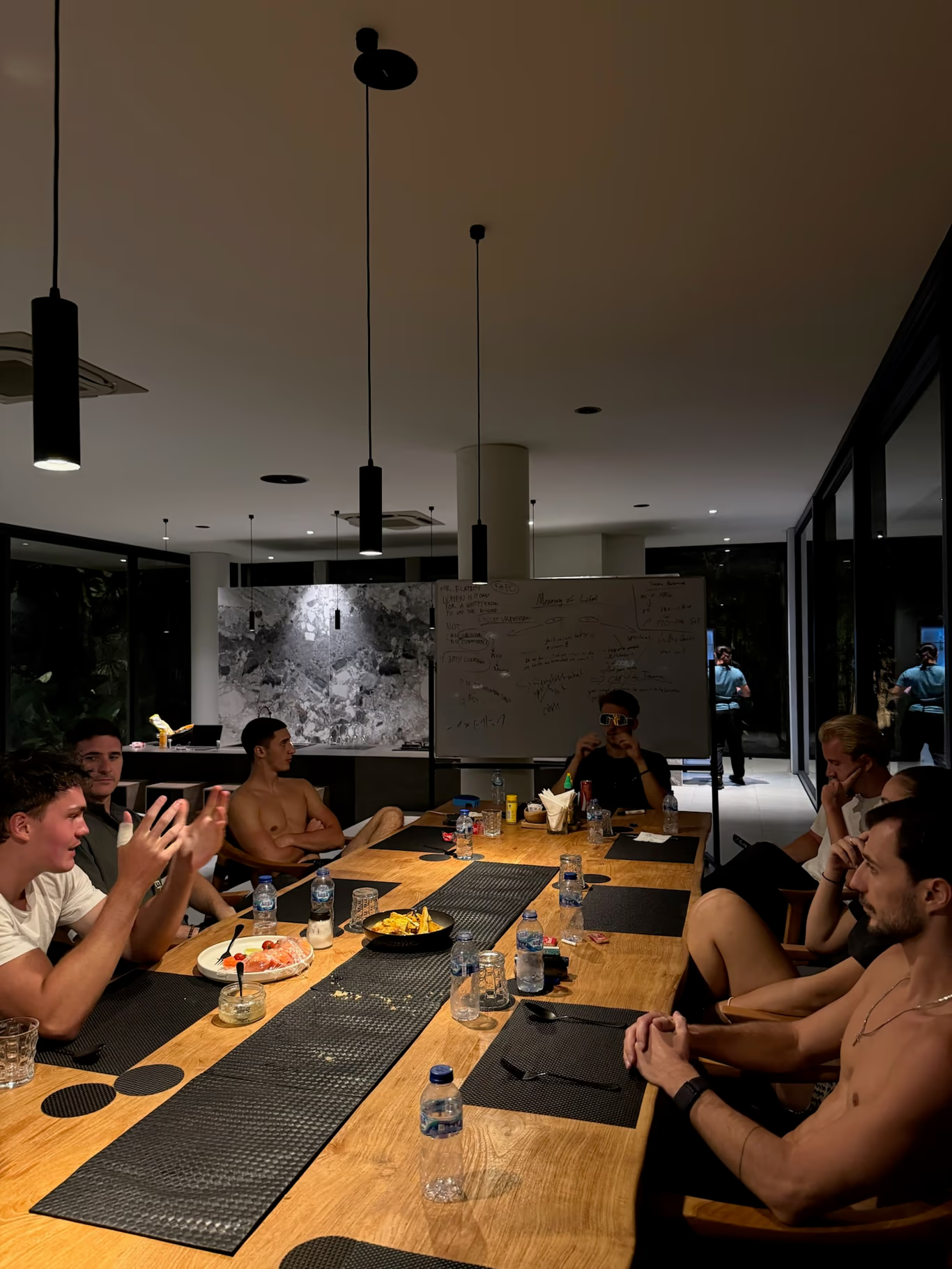
Skipping the first trip is how new seats go cold. Proximity is the whole purchase, and a member who stays home is buying none of it.
A not-yet is the honest answer for some applicants, and the useful response is building the missing piece, not redrafting the form. Ideas need operations, so ship something with customers before reapplying. Takers need a give, so earn one lesson worth handing to a table of operators. Meanwhile, read what a community is and pick the format that fits your stage today, even when that format is free. The better choice this quarter beats the prestigious one, and the form will still take four minutes once the operation is real.
Interactive · Seat Fit Check
Run the review on yourself
Seven statements the personal read screens for. Answer honestly; the H keeps the score.
0 of 7 answered
I operate a business, not an idea.
I can name something I'd give this room before something I'd take.
I'd get on a plane to have dinner with people I haven't met.
I'm fine being the least impressive person at some tables.
I can state last quarter's real numbers without rounding up.
I'd rather be corrected accurately than agreed with politely.
I return introductions instead of collecting them.
Six or more. Request your seat — you'll likely enjoy the review. The form takes four minutes, and the person who reads it wrote this page.
Request a seatFive of seven is real signal. The review exists to make exactly this call; let it make the call.
Request a seatNot yet, and that is a useful answer. Build the operation, earn the give, then come back; the form will still take four minutes. Start with the four kinds of founder community and pick the room that fits your stage today.