Helix Journal · The Rooms
 Danilo Ralić “The Plug”
What Is a Founder Community, and How Do You Choose One?
A founder community is a fixed-cadence group of business owners trading real numbers, real failures, and decisions checked by people carrying the same risk, and you choose one by matching how private your questions are to how tightly the room is gated. Employees, friends, and family cannot supply that trade. Four kinds exist, separated by two variables: how many people are inside, and who chose them. The kind you pick decides what you can say out loud for the next decade.
Choosing the right one comes down to three filters run in order: who selected the people, what the room does on a calendar, and what evidence it publishes. Those filters sort the four kinds against the trade each one makes in under five minutes, and the rest of this guide runs them.
What is a founder community, and what is it not?
A true founder community combines selected members, a repeating cadence, and mutual stakes that make honesty safe; remove any one component and what is left is not a community but an audience. Selection decides who hears your real situation. Cadence decides whether they remember it next quarter. Stakes, the shared exposure every person at the table carries, decide whether anyone tells the truth at all. All three are testable from outside before you spend a dollar. Ask who was last refused entry, when the group last met in person, and what a member would lose by bluffing. A room with good answers to all three is the real thing, whatever it calls itself.
Those three questions become a short due-diligence checklist you can run on any room before a card comes out:
- Selection: who was the last applicant turned away, and on what grounds?
- Cadence: when did the group last meet in person, and how often does it gather?
- Stakes: what would a member actually lose by bluffing in the room?
- Visibility: is the roster public, down to real names and the companies behind them?
The difference shows in a single exchange. Post a question about agency margins on a public board and you collect screenshots, guesses, and three replies from people who have never run payroll. Ask the same question at a table of twelve verified operators and you get four real profit-and-loss answers before dessert, because every person present has been checked against what they claim.
Calibration, not content, is the product.

The category is also defined by what sits outside it:
- An accelerator is not one. The cohort disbands when the program ends; a community has no demo day.
- A course with a chat attached is not one. You bought a curriculum, and the chat is its support channel.
- An audience around one creator is not one. Ten thousand people pointed at a guru are ten thousand strangers to each other.
- A 10,000-member Slack where forty people post is not one. Membership you never use is a subscription, not a seat.
One exception tests the rule. Y Combinator (startup accelerator, founded 2005) runs a three-month program, yet its alumni network behaves like a founder community for decades afterward, because admission filtered for stage and stakes once, severely, and that filter keeps paying after the calendar runs out; selection outlives scheduling.
The need underneath this is structural, not social. Building isolates in a compounding way, and founder loneliness has its own mechanics and its own fix. A community supplies witnesses, not company: people who knew your numbers last year and will compare them to next year's. Unlike a contact, a witness carries context forward. The difference shows up in a hard quarter. The contact asks how business is going. The witness asks what happened to the margin you mentioned in March. A stack of high-level networking events fills a phone with contacts in ninety days; only a room with memory produces witnesses.
What are the four kinds of founder community?
The four kinds of founder community are the free forum, the paid online network, the structured peer organization, and the small vetted circle. Every format trades scale against depth, and the gate it uses tells you which side it picked. Map any group you are evaluating onto this table before you give it money or time.
| Kind | Named examples | Typical scale | The gate | Built for | Where it breaks |
|---|---|---|---|---|---|
| Free forum | Indie Hackers (open online founder forum, founded 2016), r/startups | Tens of thousands | None | First answers at zero cost | Candor: nobody posts real revenue problems in public |
| Paid online network | Founders Network (subscription peer network for tech founders) | Thousands | A payment form | Volume of intros and threads | Lurker ratio: the members you joined for rarely post |
| Structured peer organization | EO (Entrepreneurs' Organization, est. 1987), YPO (est. 1950), Vistage (chair-led advisory groups, est. 1957) | Thousands, in city chapters | Revenue or title threshold | A fixed confidential small group on a monthly rhythm | Geography assigns your group, not fit |
| Small vetted circle | Hampton (digital-first founder community) core pods, Helix | 100 or fewer | A person reviews each member | Depth: everyone knows your name and your numbers | A soft cap quietly converts it back into a network |
Ten thousand members buy reach and anonymity; one hundred buy recognition and accountability; no format delivers both.
The fourth kind caps for a working reason. A founder can hold maybe a hundred peers in real memory: who runs what, who raised what, who is bleeding margin this quarter. Past that line, the rest become names in a directory you scroll past, not people who would notice your absence.
Choose downward in size as your questions become more private.
The third kind earns a closer look because its core mechanism is the strongest thing on the table. EO's Forum, a confidential group of 8 to 10 members meeting monthly, gives an operator a fixed cell with real privacy norms, and the format has held since 1987. The trade hides in assignment. Your Forum is drawn from your city chapter, so a local restaurateur may end up reviewing your software business, whereas a vetted circle selects for what you build, not where you live. Session-driven formats make a different trade again, running on structure rather than membership; mastermind groups are the adjacent format, with their own cost logic and their own failure modes. Plenty of operators run one of each, since the two answer different questions in different rooms.
Watch for one failure mode in the fourth kind: a vetted circle that raises its cap every quarter is converting depth back into scale, whatever its landing page still says. The cap is the product, and a circle that abandons it has changed category without telling you.
No single kind carries everything a founder needs held, either. A community fills one seat of a complete founder support system, alongside mentors, coaches, and in some seasons a therapist. Treat it as one chair at the desk, not the whole desk.
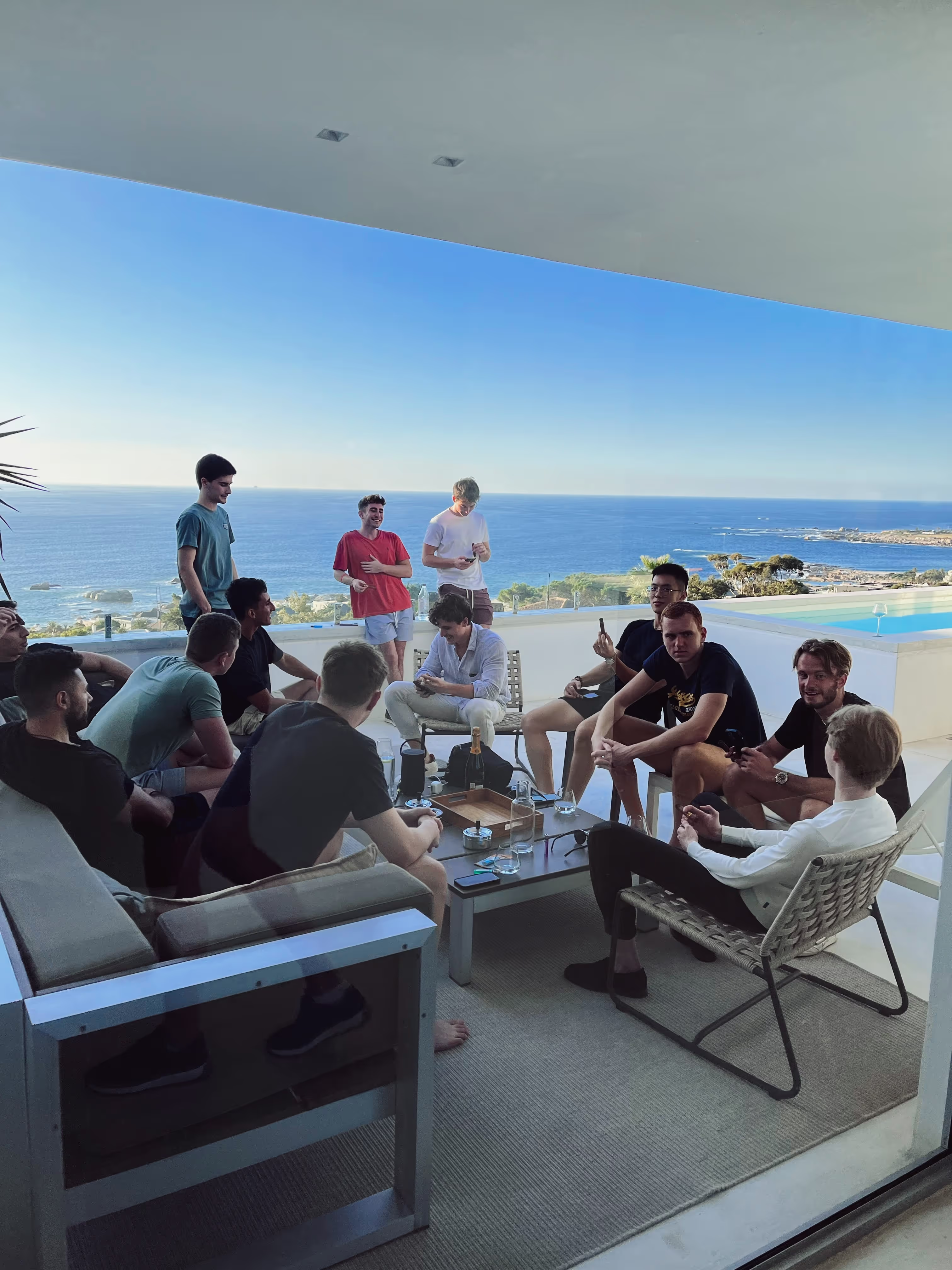
From the founder's journal
We don't even advertise Helix. We don't need to — the community builds itself. People give back, people share, people win together.
Danilo Ralić — “The Plug,” Helix founderHow do you choose the right founder community?
You choose the right founder community by running three filters in order: who selected the people, what the room does on a calendar, and what evidence it can show. Run them in that sequence, because marketing answers none of these while mechanics answer all three.
The filters convert to plain sorting rules:
- Your question is generic ("which payment processor") → a free forum answers it tonight, free.
- You need volume of introductions → a paid network maximizes surface area per dollar.
- You clear the revenue gate and want a confidential fixed cell → a structured peer organization delivers exactly that, on a schedule.
- You want a handful of people who know your real numbers and would notice your absence → a small vetted circle is the only format built for it.
When two rules both apply, pick the smallest vetted room that will have you.
The case against paying for any room deserves a straight answer. The internet publishes every playbook free, and a disciplined founder can assemble advisors, podcasts, and operator threads without paying dues. For information, that argument holds, and a free stack is the better choice when information is all you need. For calibration it fails, because public channels never see your actual figures. Nobody on a forum can tell you whether an 8% net margin is a crisis or normal for your model, since nobody there has verified what your model is. The test cuts both ways: a paid room that only repeats what you could read free deserves to lose you. You pay to be measured accurately by people qualified to measure.
Price tracks the gate, not the badge, so the dues map cleanly onto what each kind can actually deliver (cost bands below are editorial estimates, not list prices):

| Kind | Typical annual cost | What the money buys | Worth paying when |
|---|---|---|---|
| Free forum | $0 | Public answers at same-day speed | Your question is generic and tactical |
| Paid online network | Low hundreds | Intro volume and a searchable thread archive | You want reach and surface area per dollar |
| Structured peer organization | Low-to-mid thousands | A confidential fixed cell and chapter events | You clear a revenue gate and want monthly structure |
| Small vetted circle | Premium dues | Recognition from a capped room that knows your numbers | You want peers who would notice your absence |
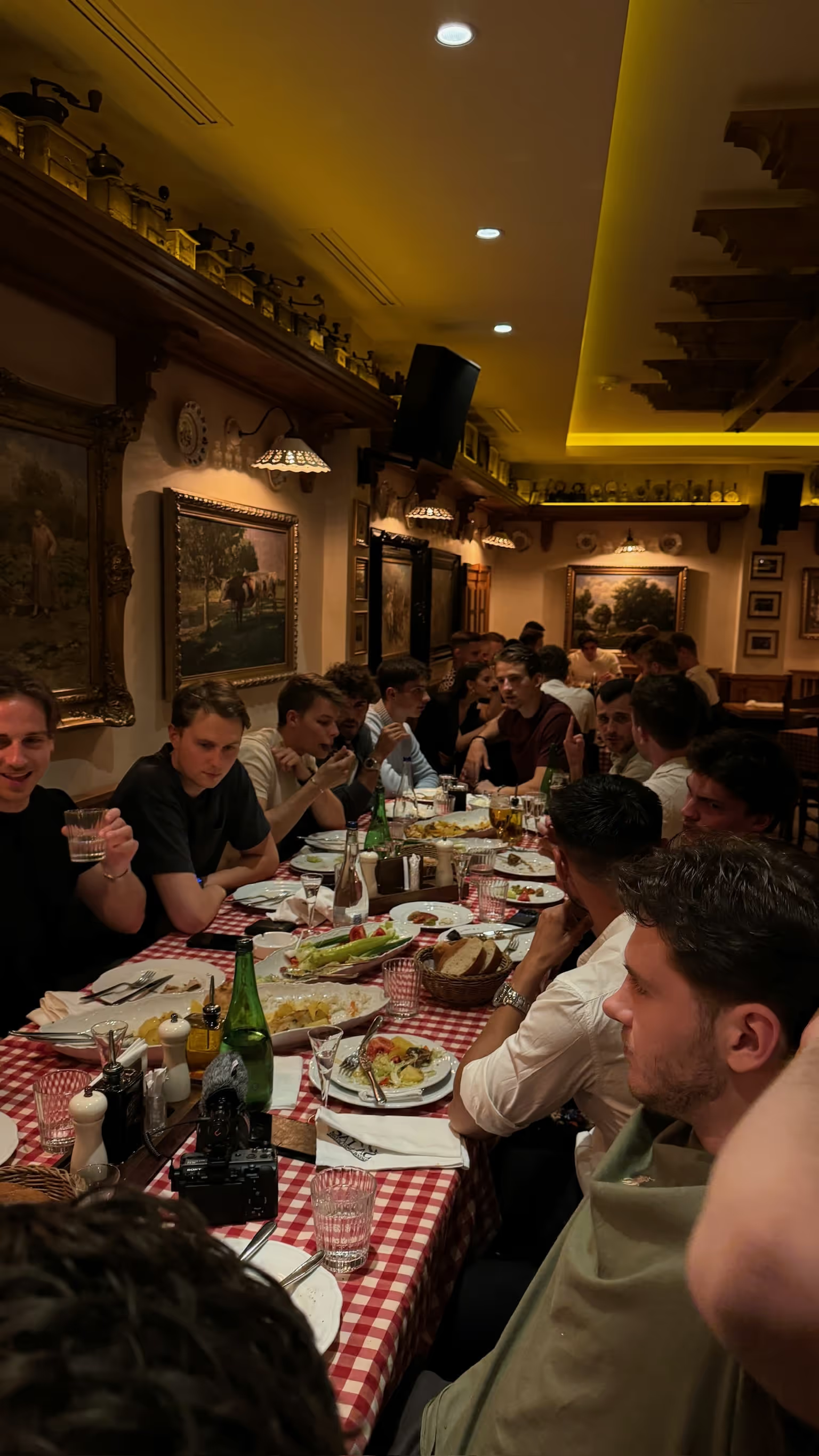
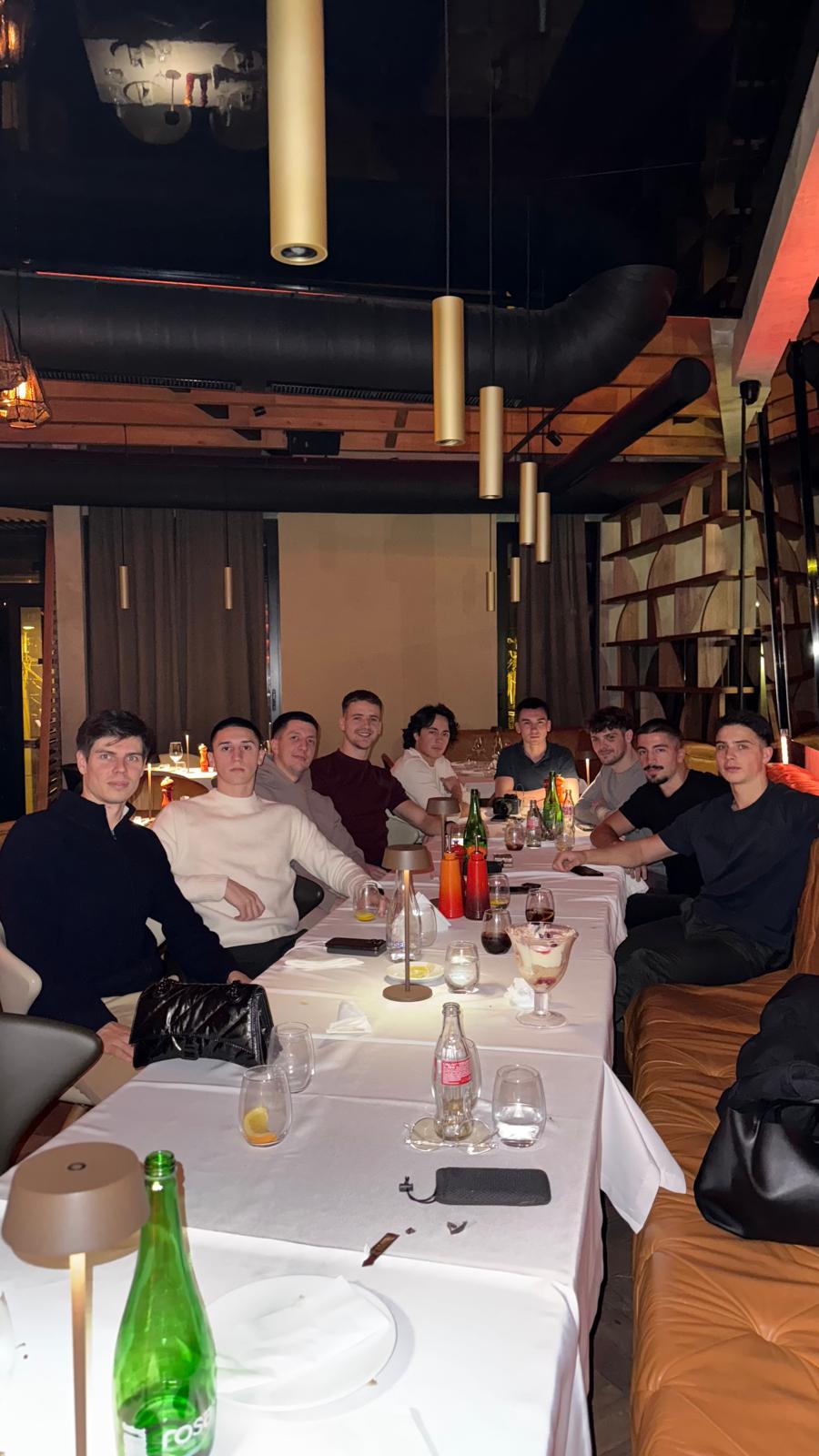
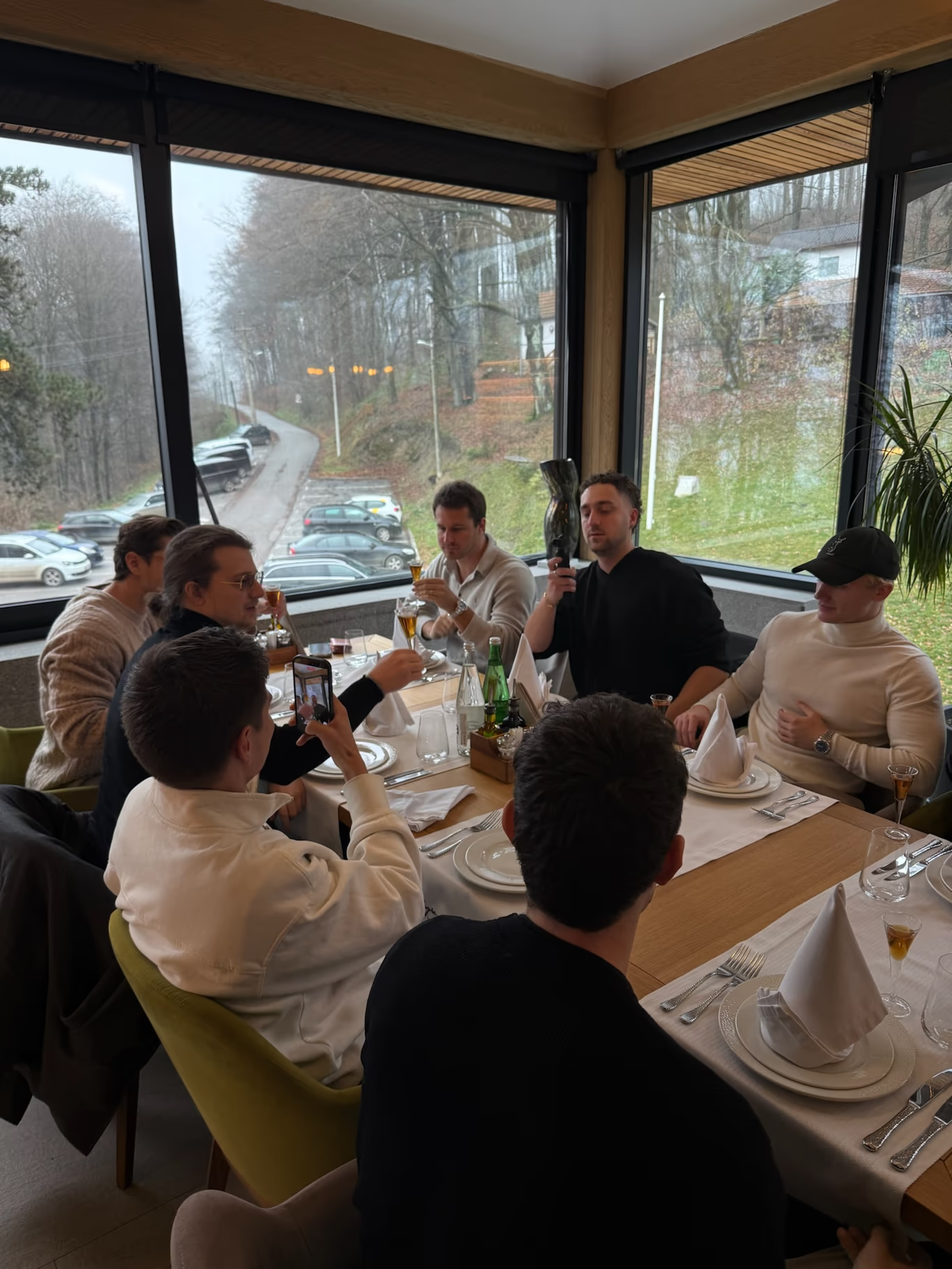
Proof is the filter most founders skip, so apply it last and hardest. Helix (a private vetted founder community, est. 2024) publishes the evidence a buyer should demand from the fourth kind: roughly 100 seats, every application read personally by its founder, and a table set across 60+ trips on 4 continents since 2024. The roster is public, down to names and companies. Nikola Stojanovic, founder of the multi-seven-figure e-commerce brand Giga.rs, sits at it beside operators running businesses from seven figures past $30M a year. The cadence is documented twice over: an open log of entrepreneur group trips and 12 public vlogs you can watch before you apply. Hold any room you are considering to that bar. Ask for the cap, the gate, and the calendar, then ask how vetting works and what it has rejected.
Stage mismatch is the quiet failure even good rooms allow, and the strongest circle at the wrong stage is still the wrong circle: a $10M operator seated among pre-revenue founders answers questions all night and asks none. Generosity is not calibration.
Stay within one stage of the median member, in either direction.

Interactive
TableFinder: which room fits you?
Three questions. Honest answers, including the ones that don't point here.
1 · Where is the business today?
2 · What's actually missing?
3 · Format?